Archive — Microsoft India Design Challenge / LNMIIT / 2022
Burnout was invisible. Jaya wasn't.
The brief: identify a problem in the field of well-being and create a product using human-centred design. My answer targeted the era's quietest health problem — excessive screen time from work-from-home life, and the mental and physical toll that comes with it.
Burnout was measurably worse at home
01 — Research
Secondary research across health and organisational sources converged on an uncomfortable pattern: remote professionals reported more burnout than office workers, not less — driven by longer hours, higher perceived expectations, and isolation. Interviews echoed it directly: people missed the ambient interaction of an office, skipped breaks, and coped alone. A quantitative survey of working professionals in India rounded out the picture.
Remote work didn't remove workplace stress. It made it invisible — and isolation turned out to be a major source of it.
The proto-persona that anchored the design: Kushagra, 28, a data analyst in Jaipur — tech-savvy, always online, meetings into hobby projects into more screens. Quiet, wants someone to talk to, worried that screen time is eroding his health, never finds time for his body.
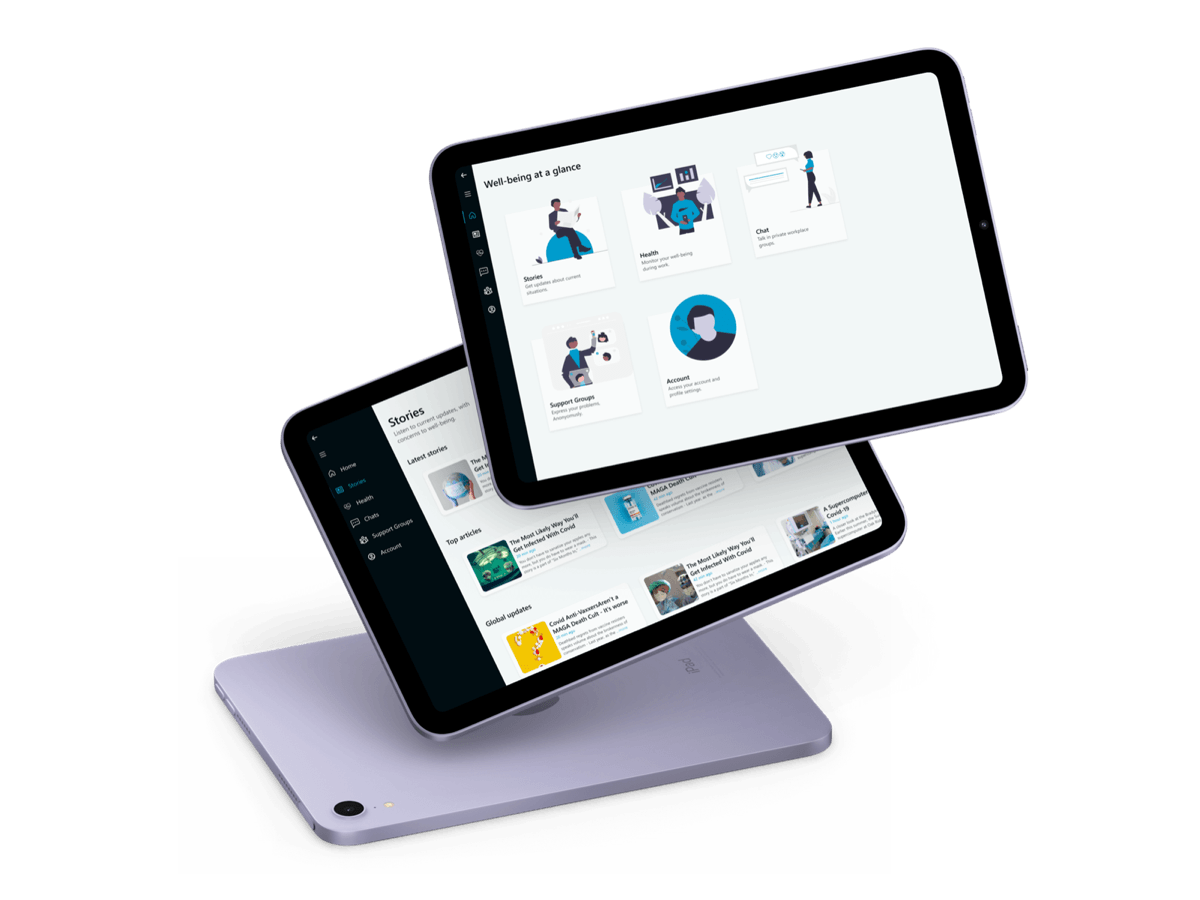
Four features against isolation
02 — Solution
01 — Stories
Stay aware
Curated updates on everything happening in healthcare and well-being — awareness without doomscrolling.
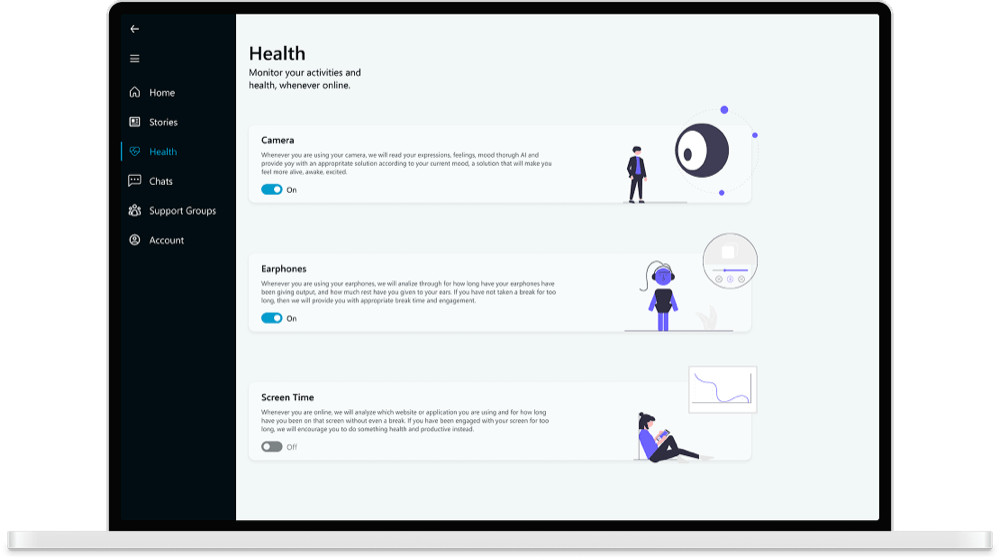
02 — Health
Interactive nudges
Monitor well-being during work and get interactive tasks whenever you're feeling down — not generic notifications.
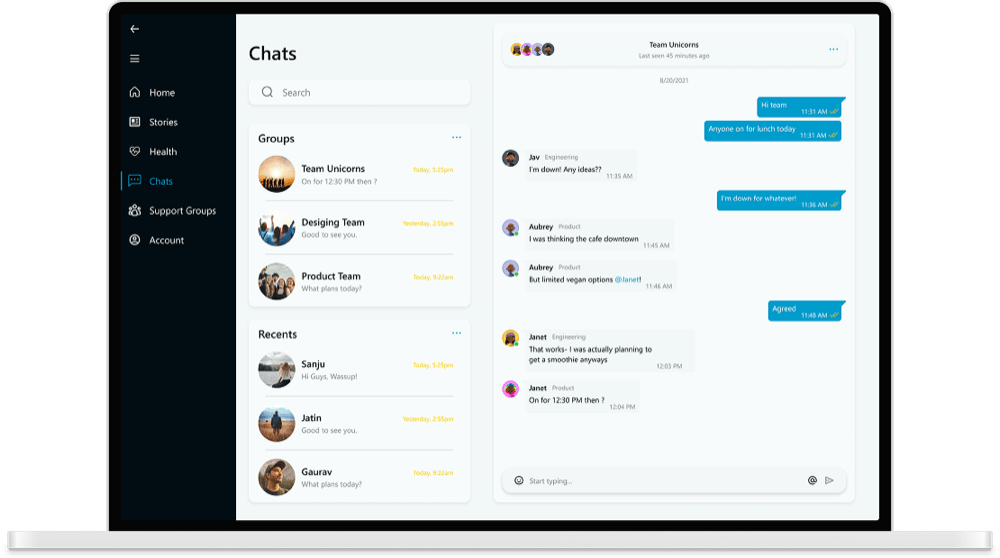
03 — Chat
Heart-to-hearts
Private workplace groups for the conversations remote work deleted. Don't be shy — engage your coworkers.
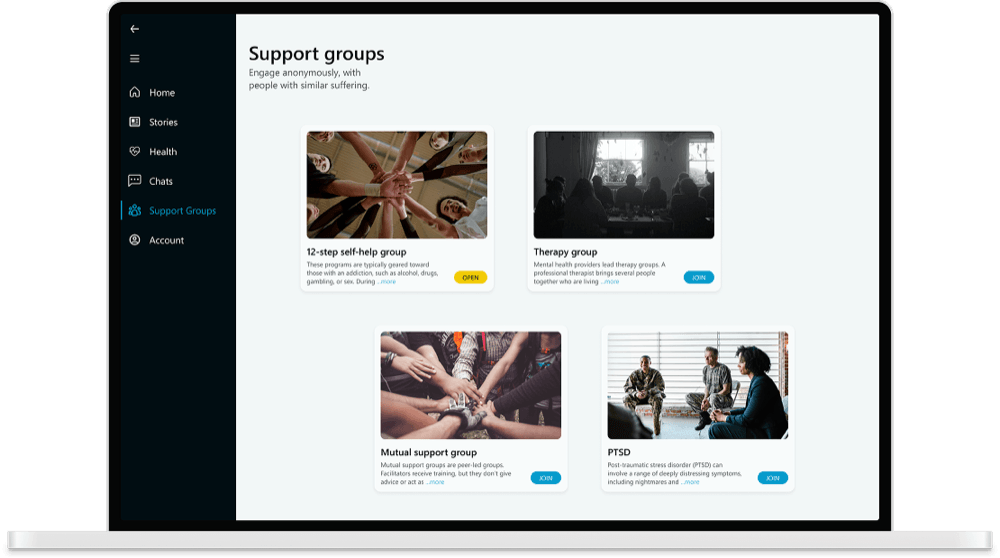
04 — Support groups
Anonymous expression
Join support groups, be open, and express your problems — anonymously, without workplace consequences.
The complete case study
03 — Full write-up
The original long-form write-up — full double-diamond process, research data, IA, and wireframes — was published on UX Planet.