01
One app with a fork, not two apps
GainedOne sign-in, one payment flow, one kit for 111 screens.
CostThe first screen asks a question before showing any value.
Case study 03 — Client work at Metafic
iSail: seafarers apply with a CV built around their documents, and recruiters run their hiring from the same app. Designed end to end, for both.
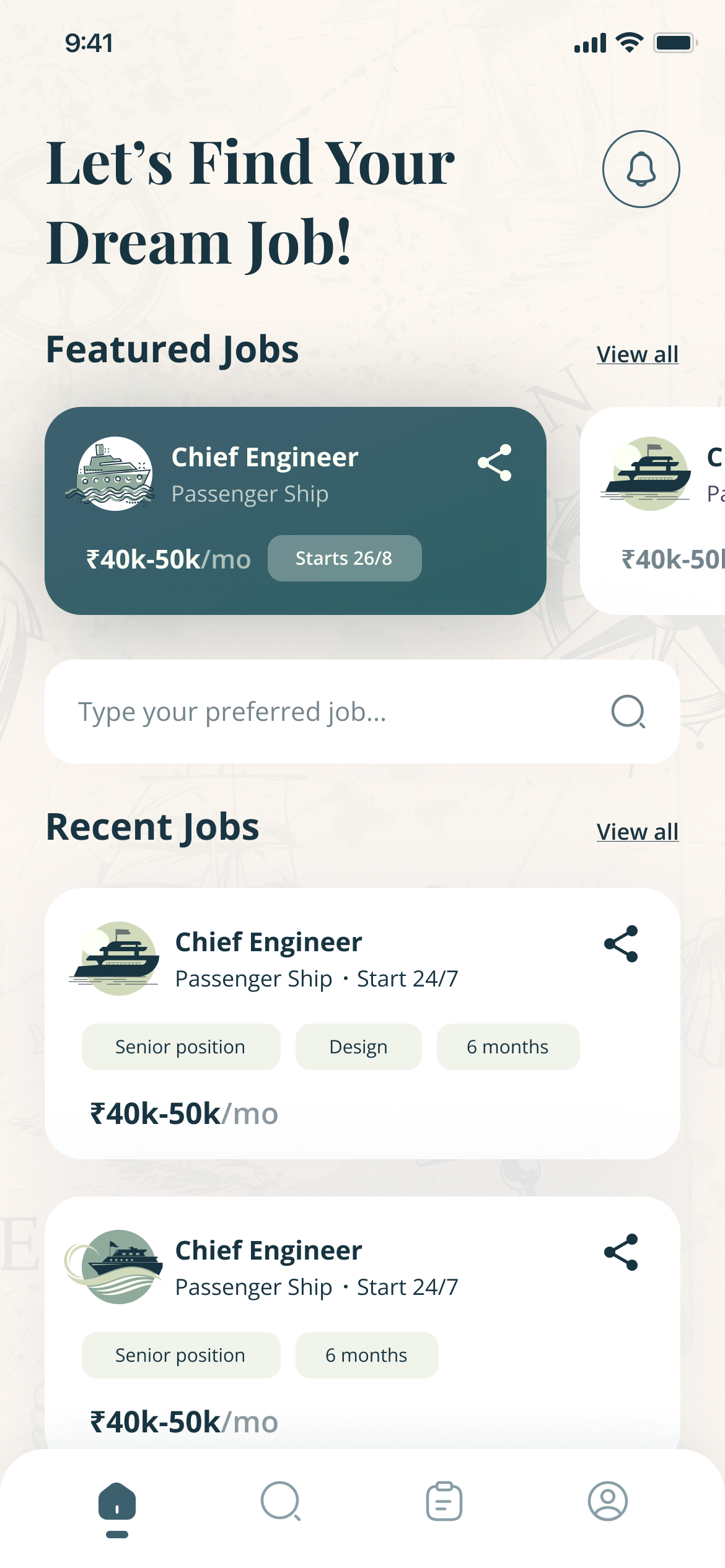
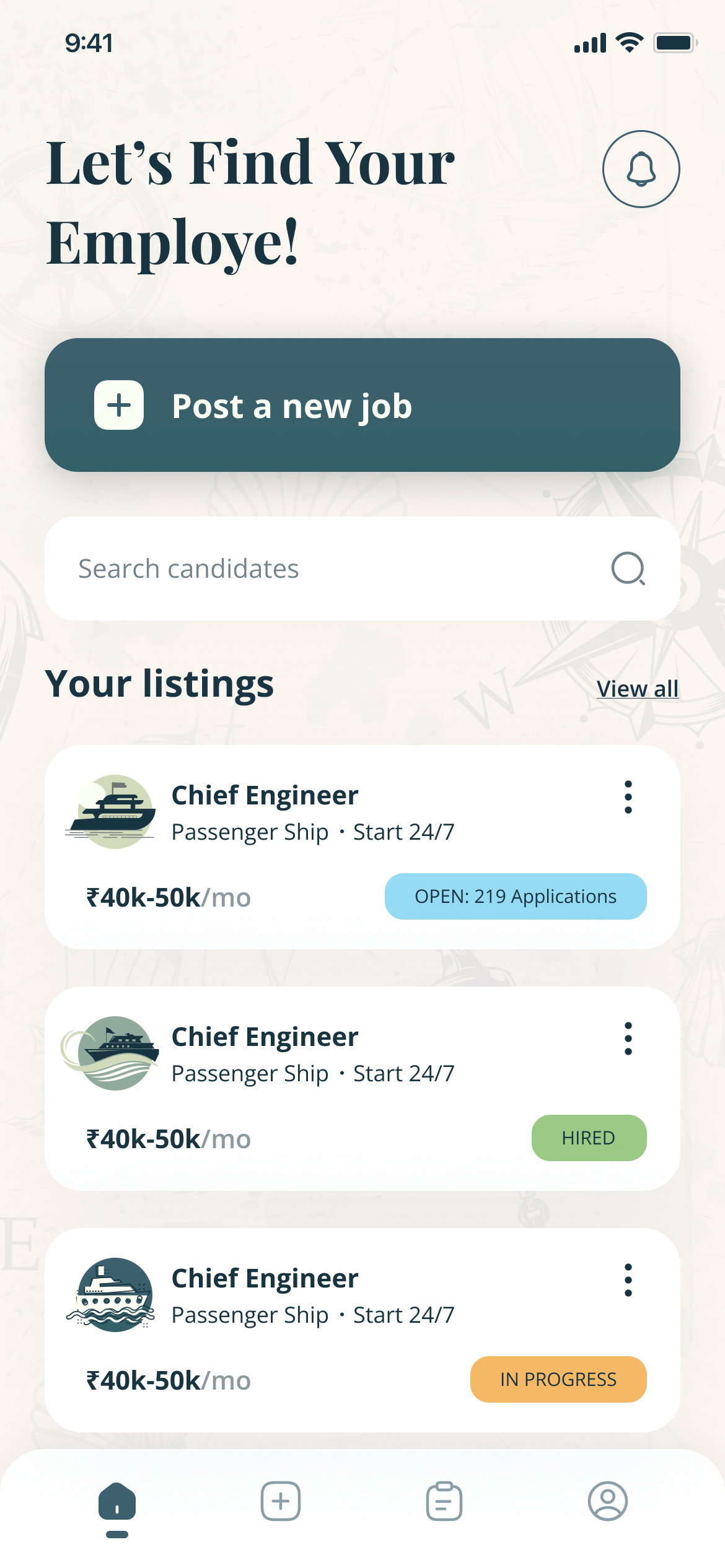
01 — Why a job board fails here
A seafarer’s CV isn’t a CV. It’s a stack of documents with expiry dates.
Source: BIMCO and ICS, Seafarer Workforce Report, June 2026
02 — Two users
The same vacancy, seen from opposite ends.
The seafarerBetween contracts
Wants the next contract for their rank and ship type, without re-typing their documents every time.
The recruiterCrewing agency
Needs a shortlist of compliant candidates for a ship that sails on a fixed date.
03 — The fork
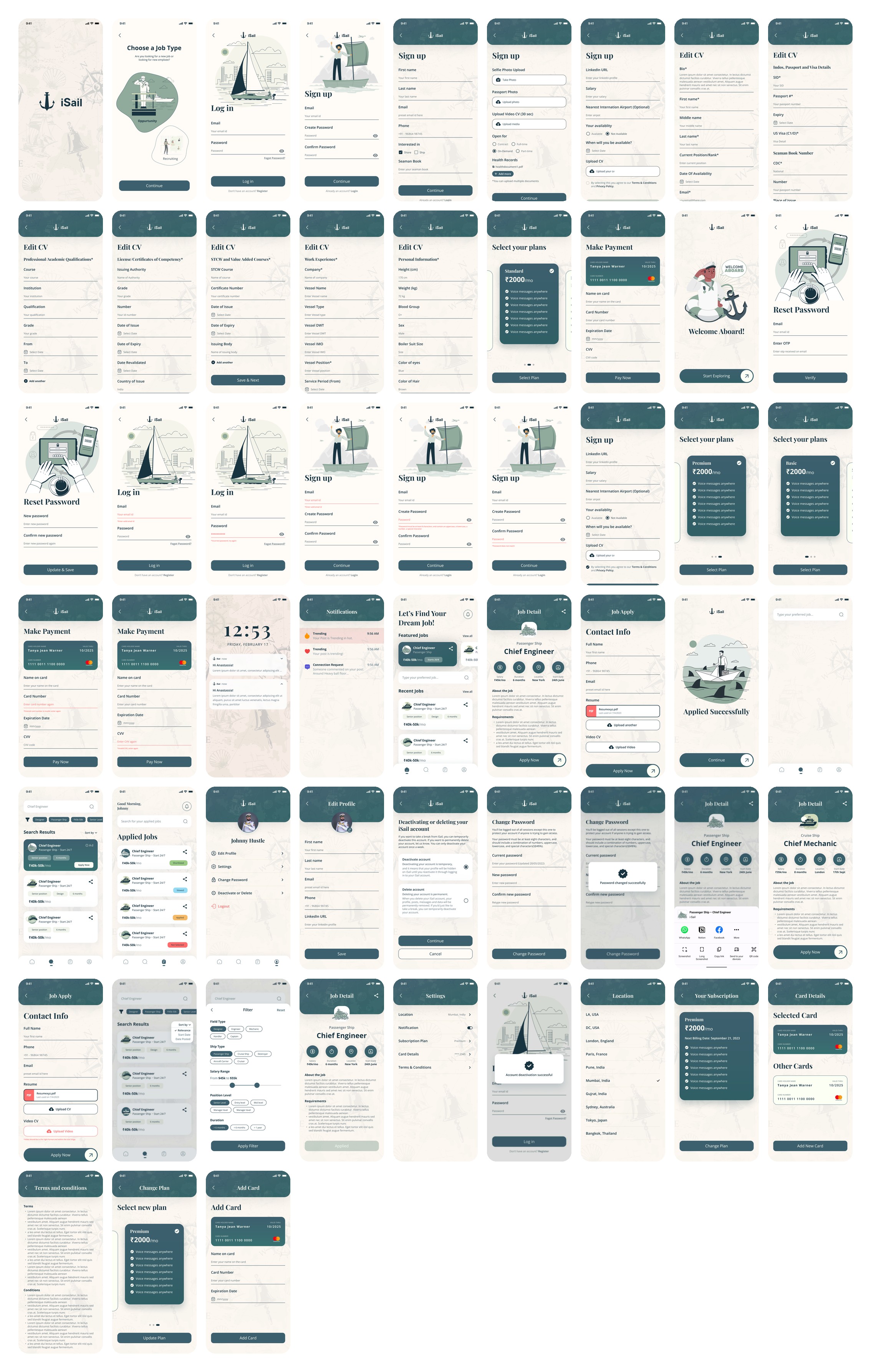
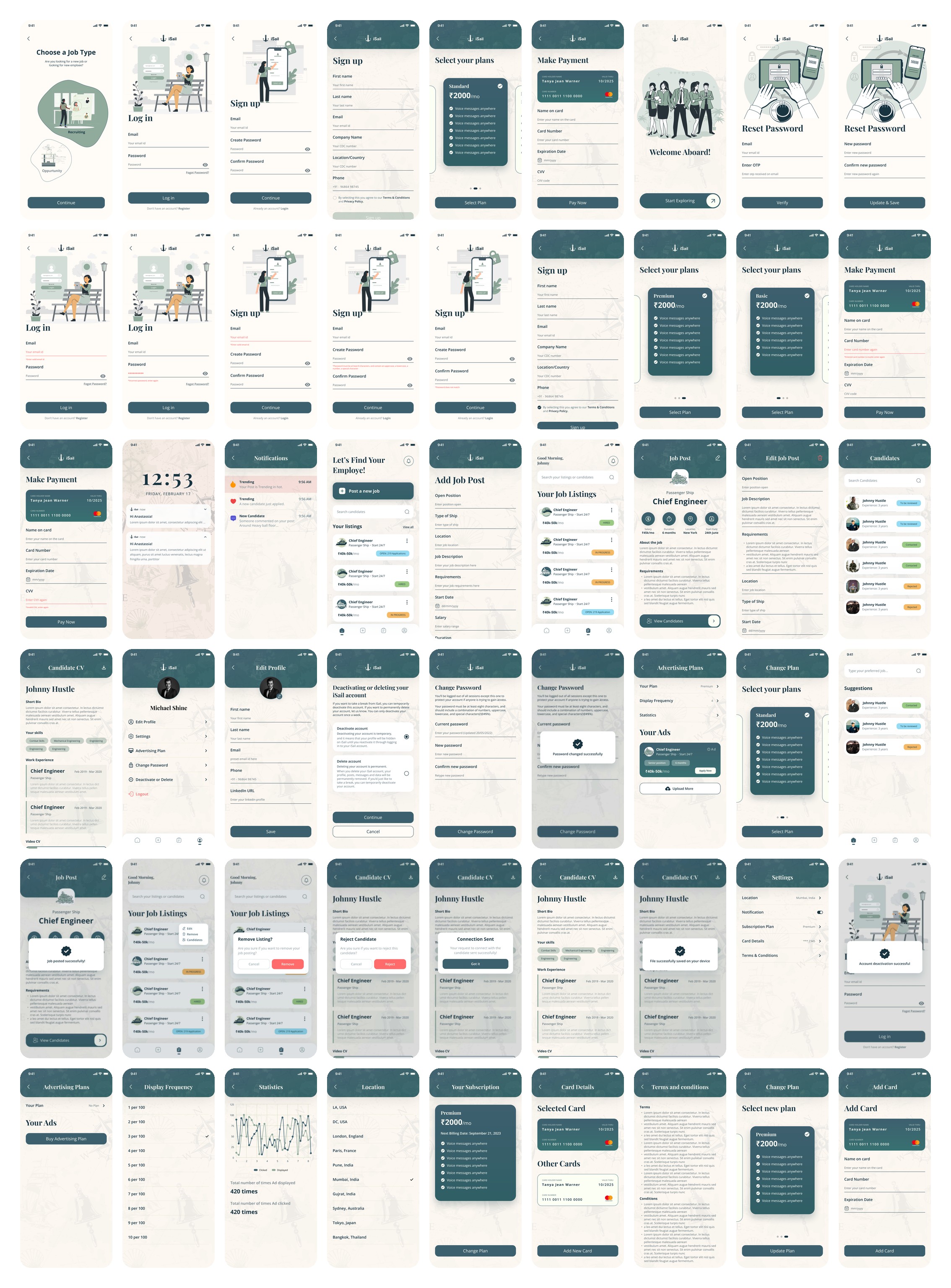
The first screen asks one question, and the app splits in two.
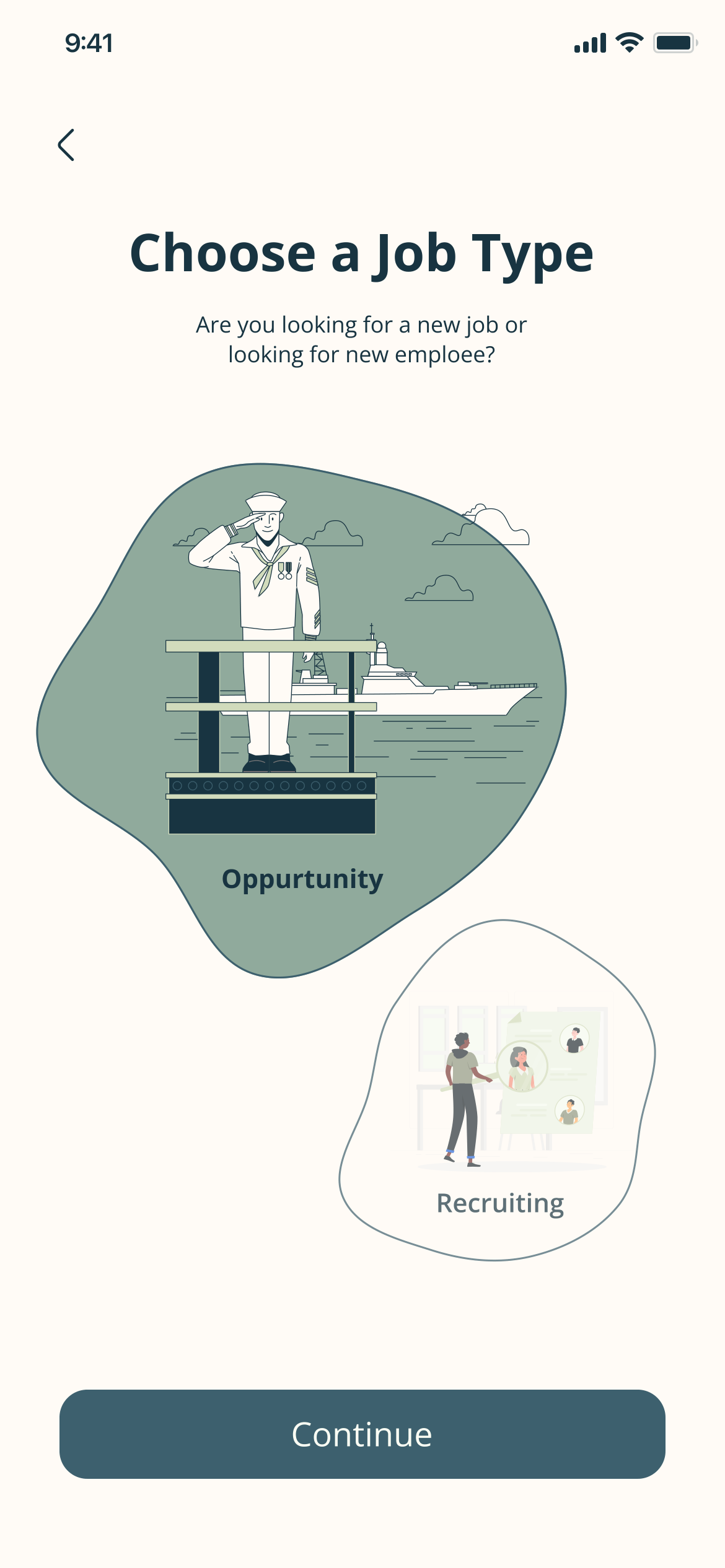
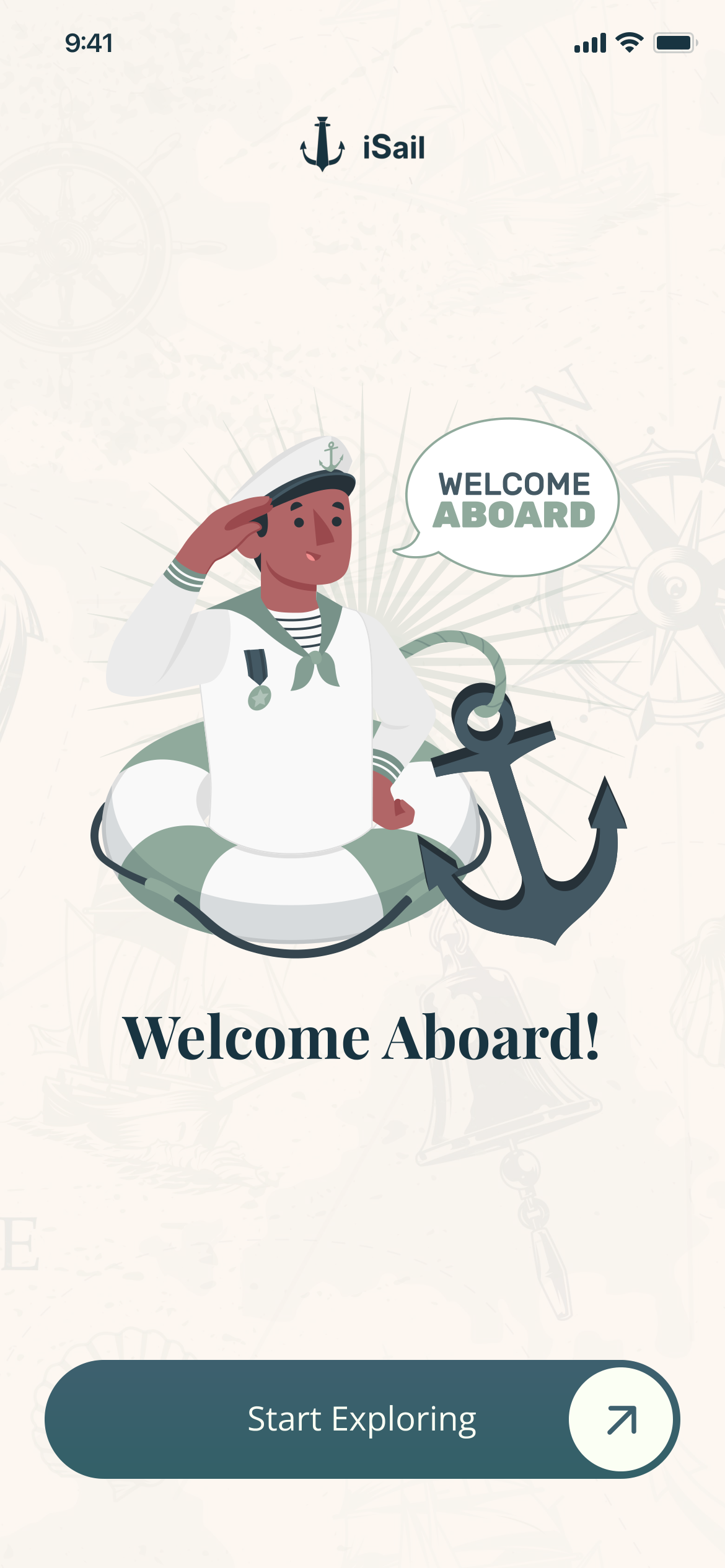
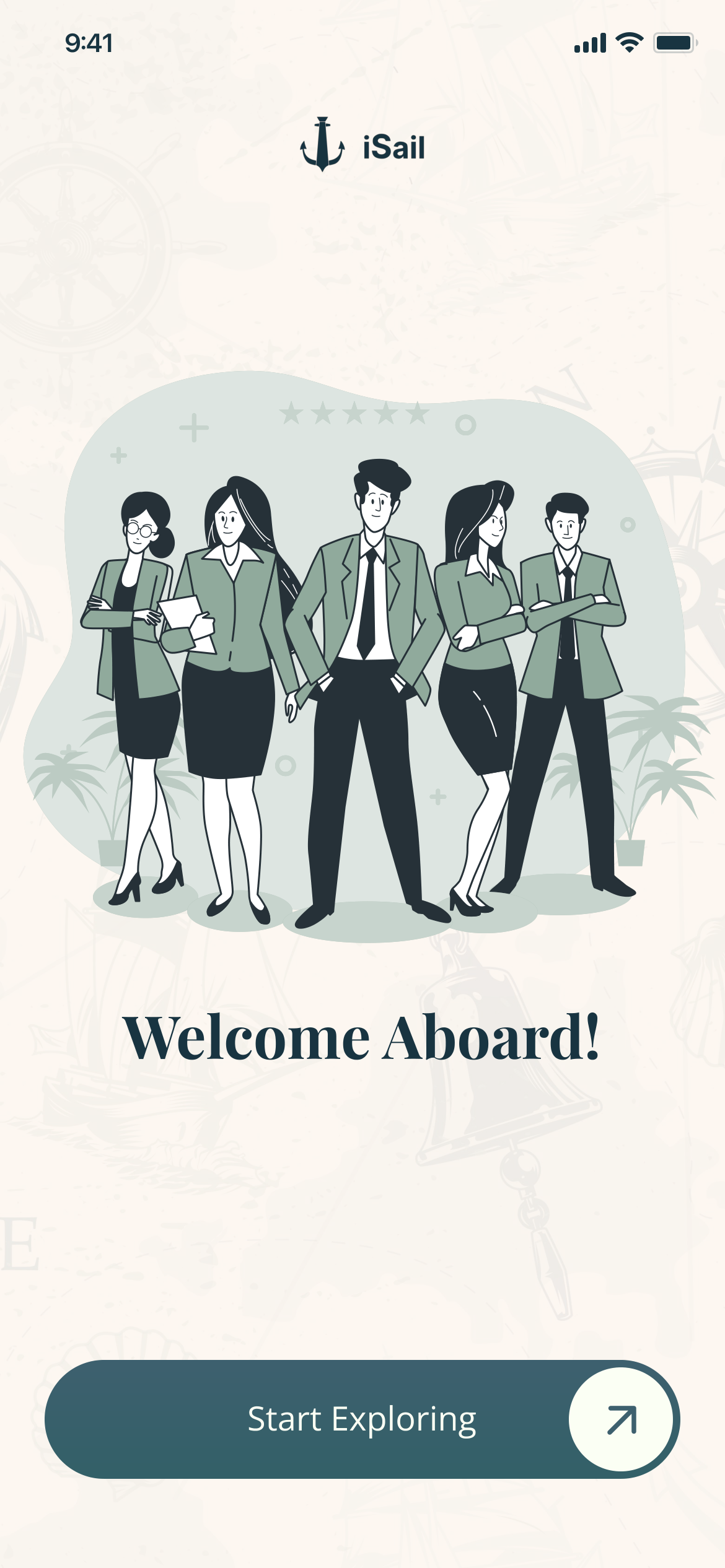
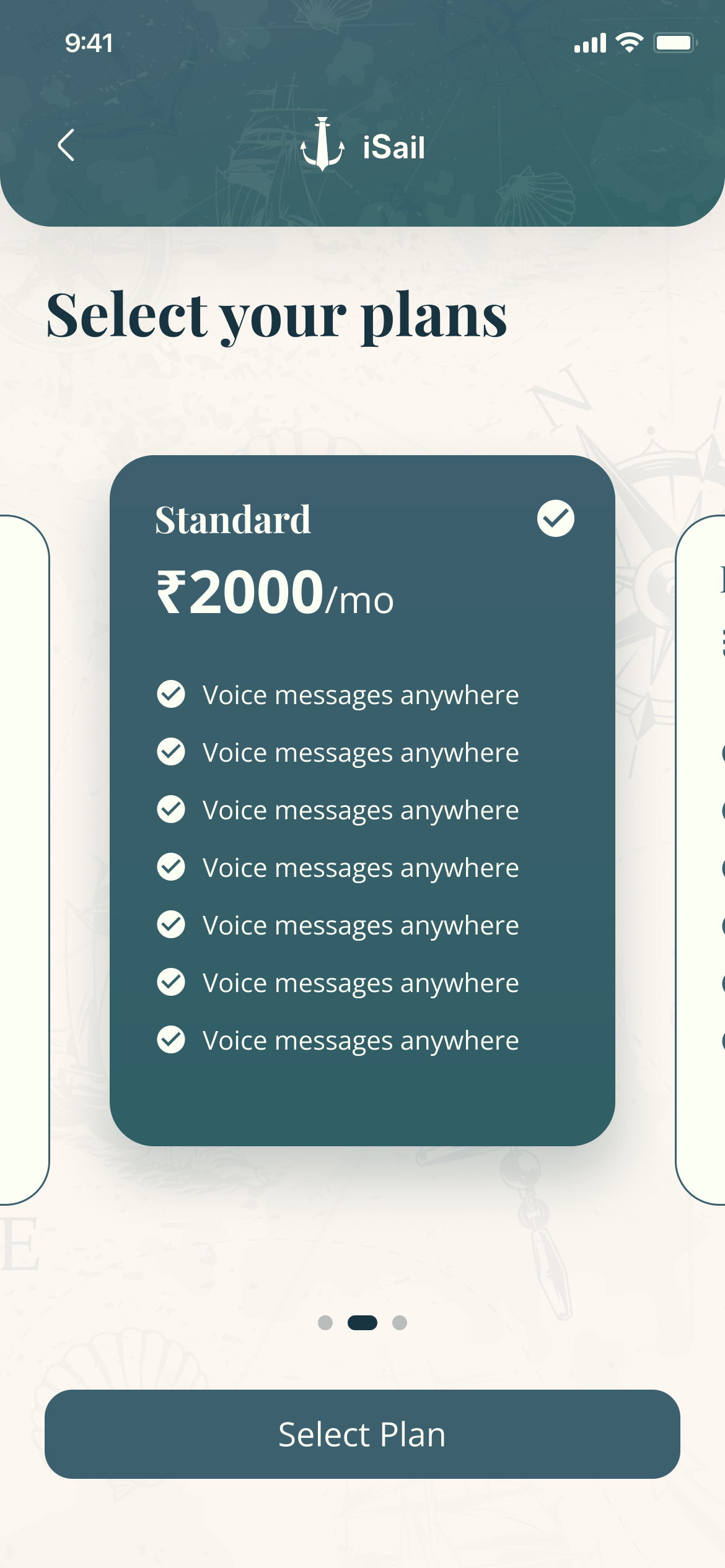
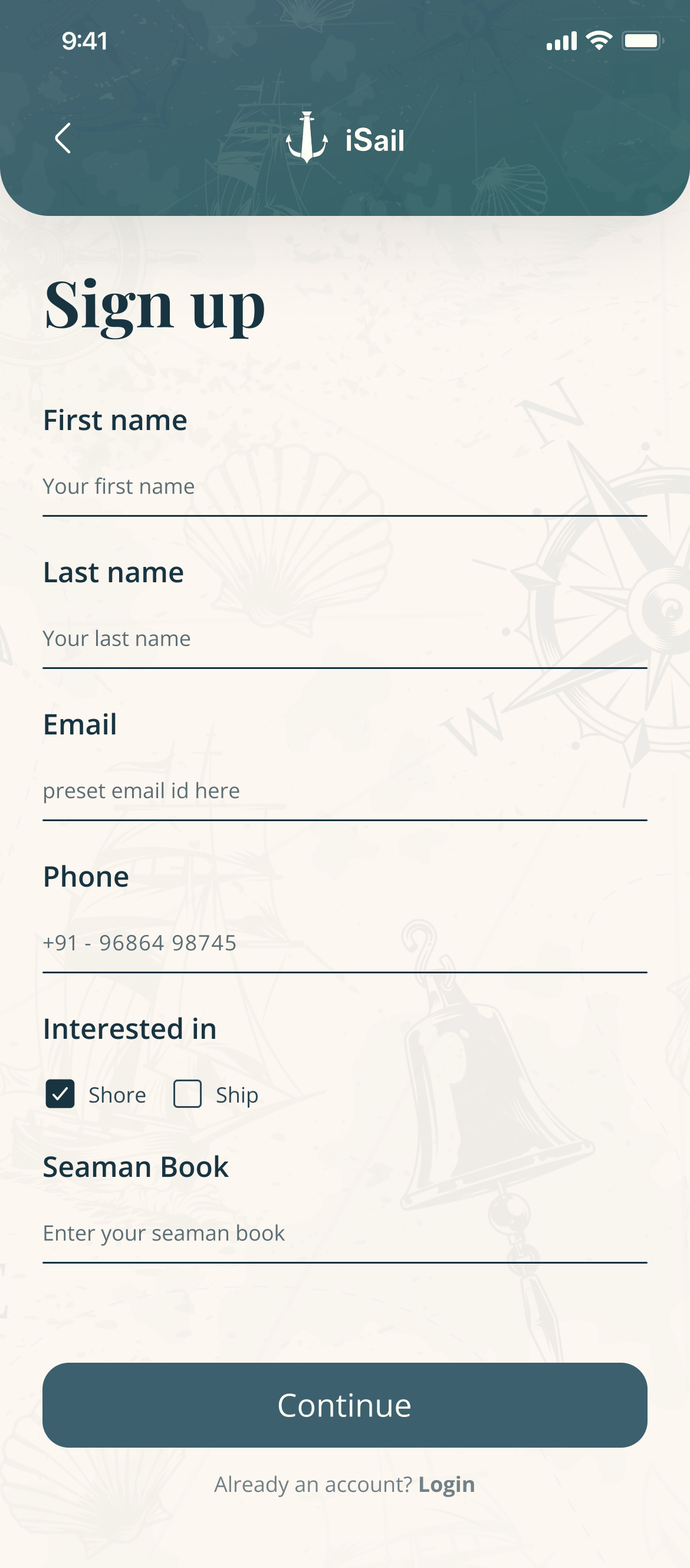
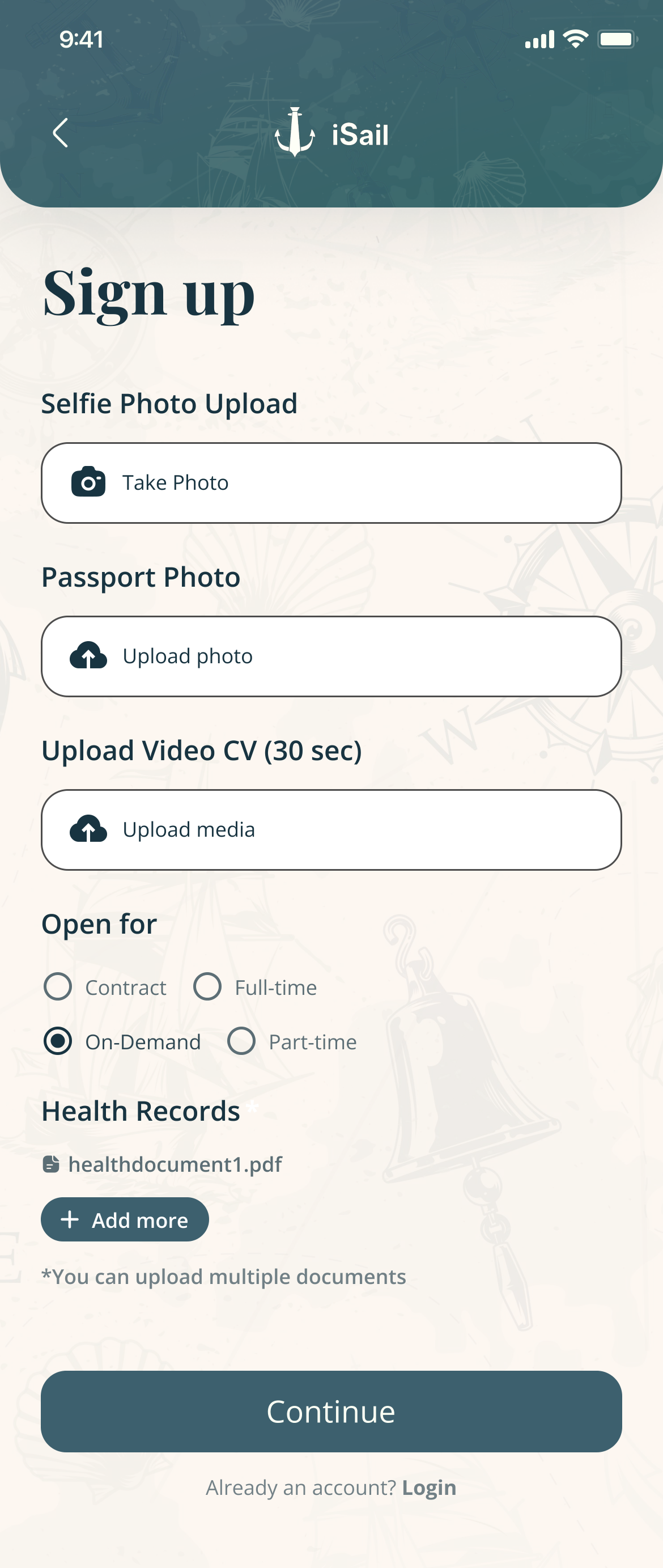
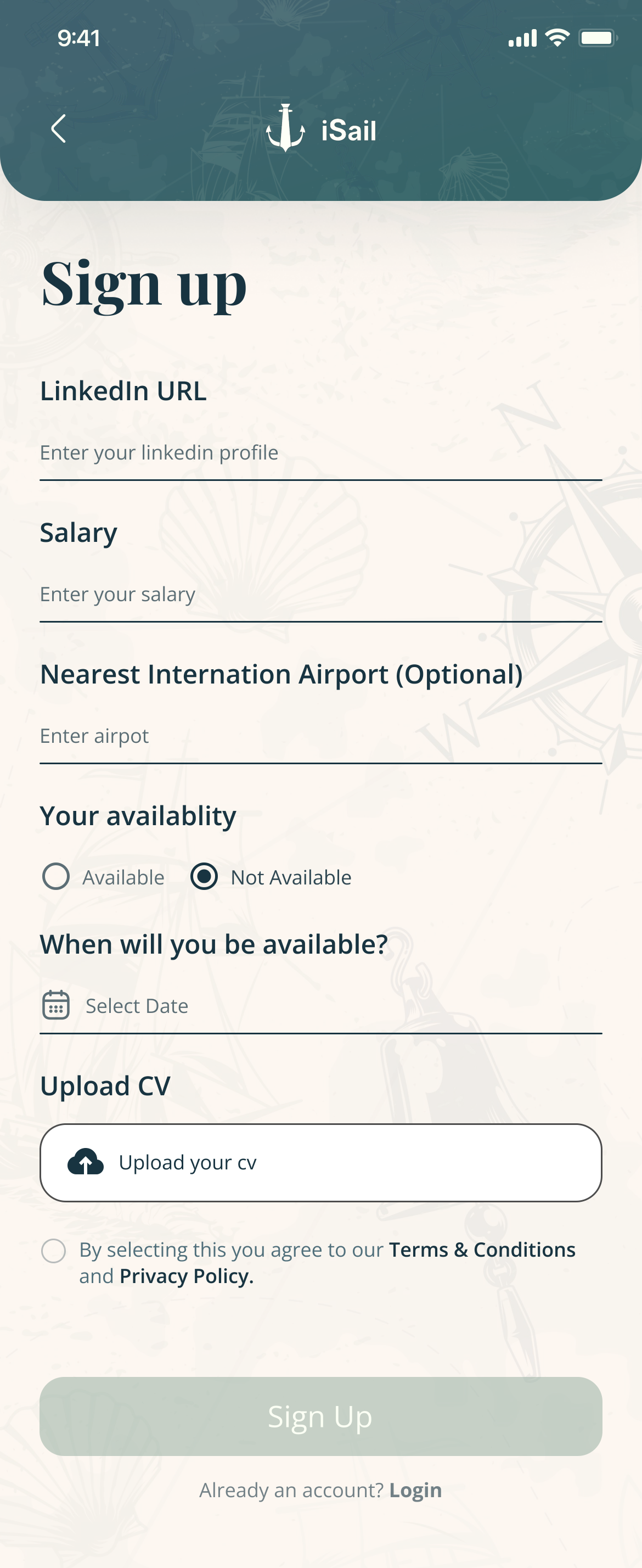
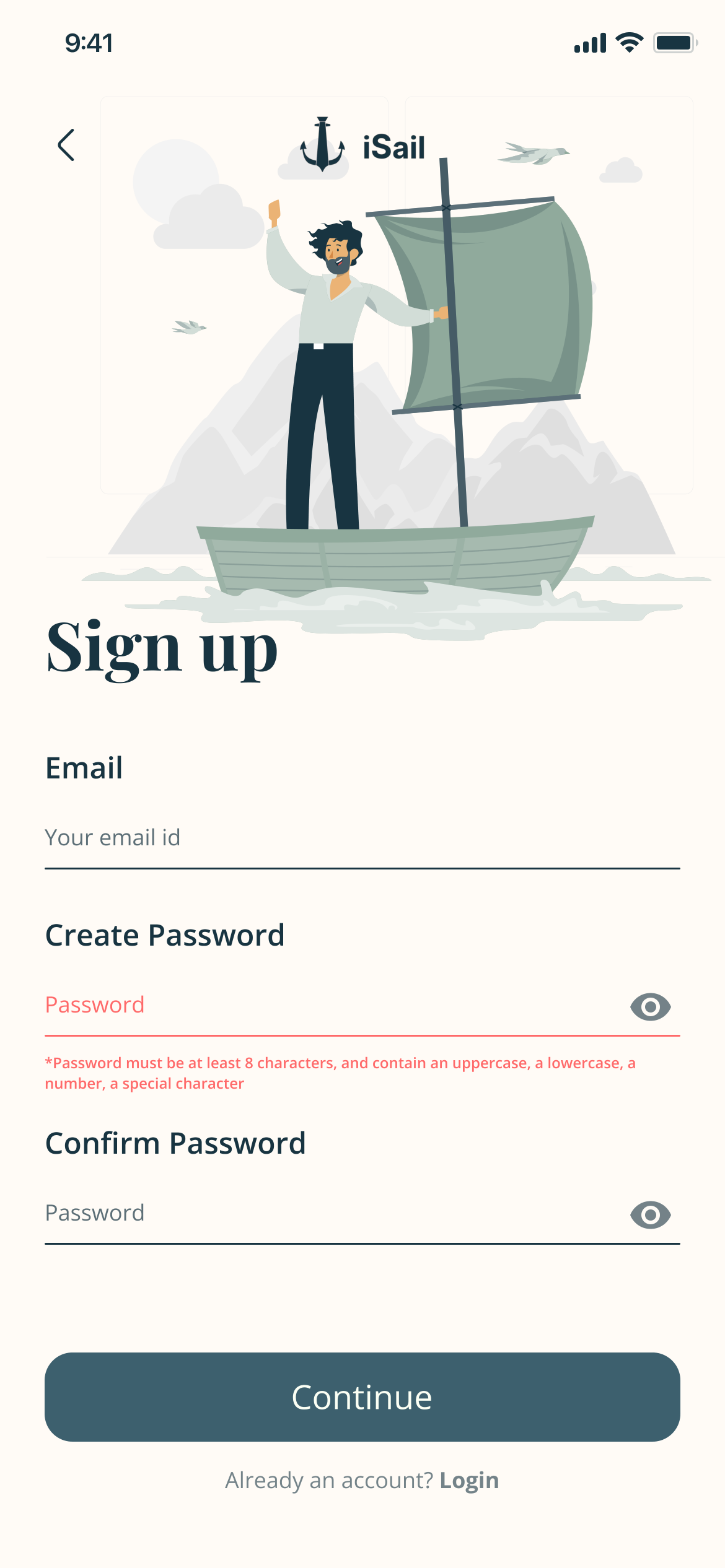
Sign-up for seafarers is three short steps, not one long form.
04 — The seafarer
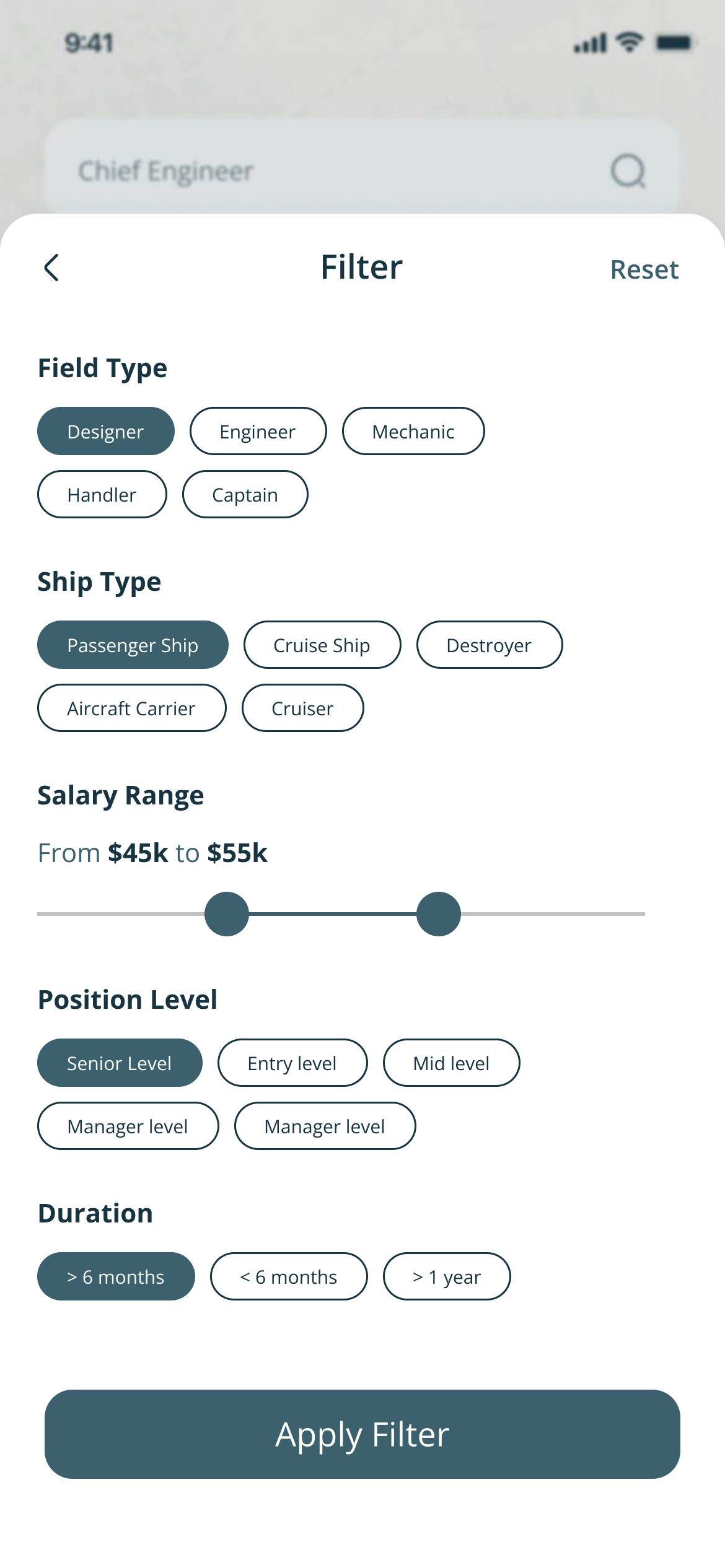
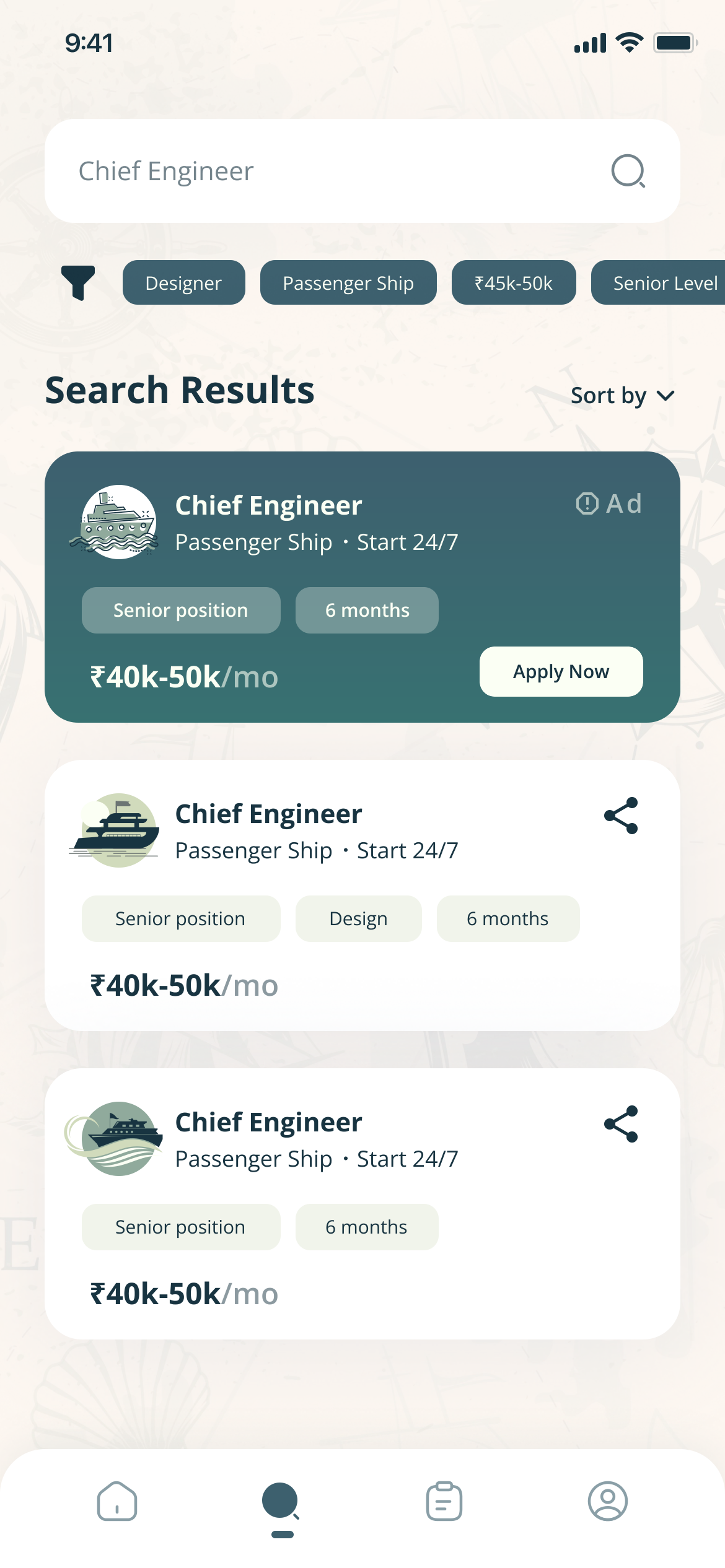
From a search to applied in a few taps, in the industry’s own terms.
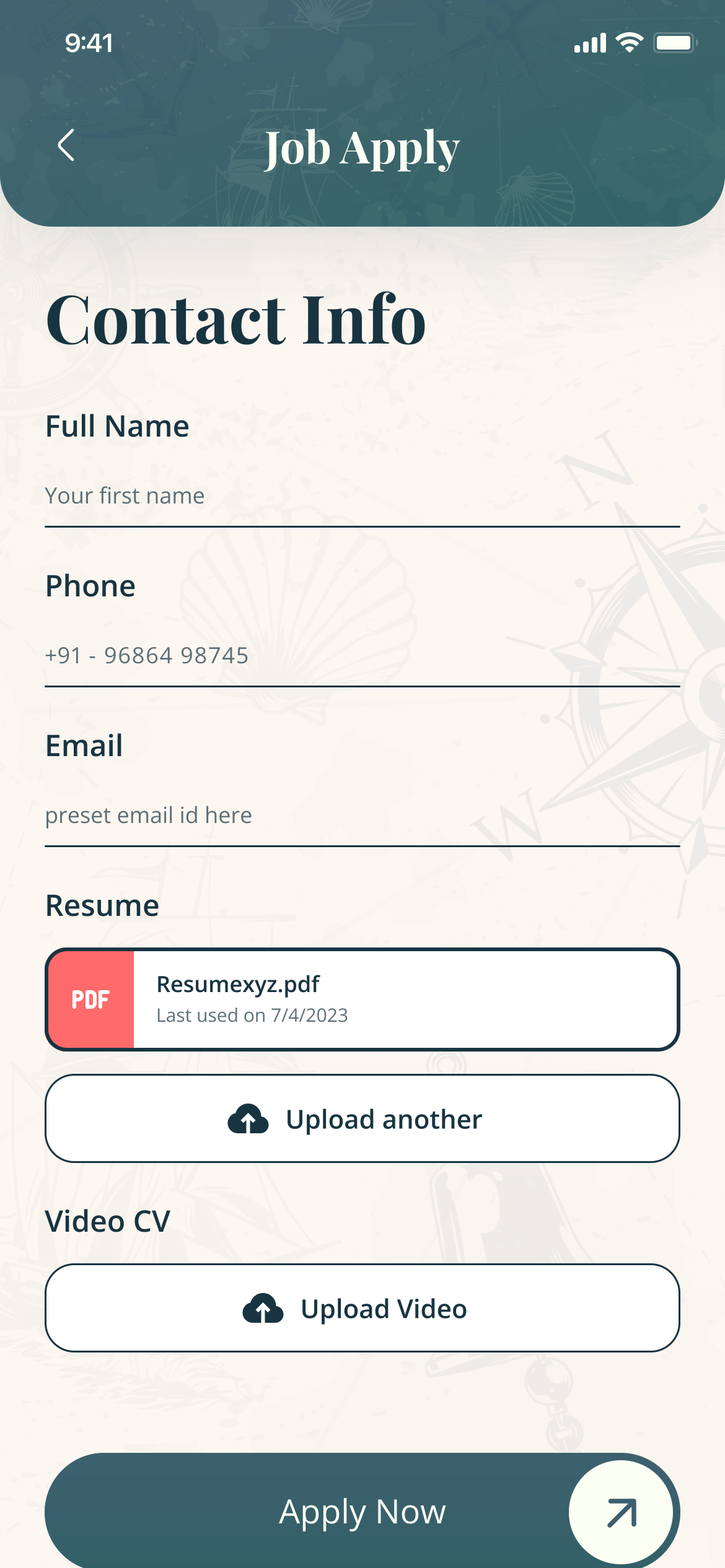
05 — Four decisions
Four parts carry the trust on both sides, so they got the most work.
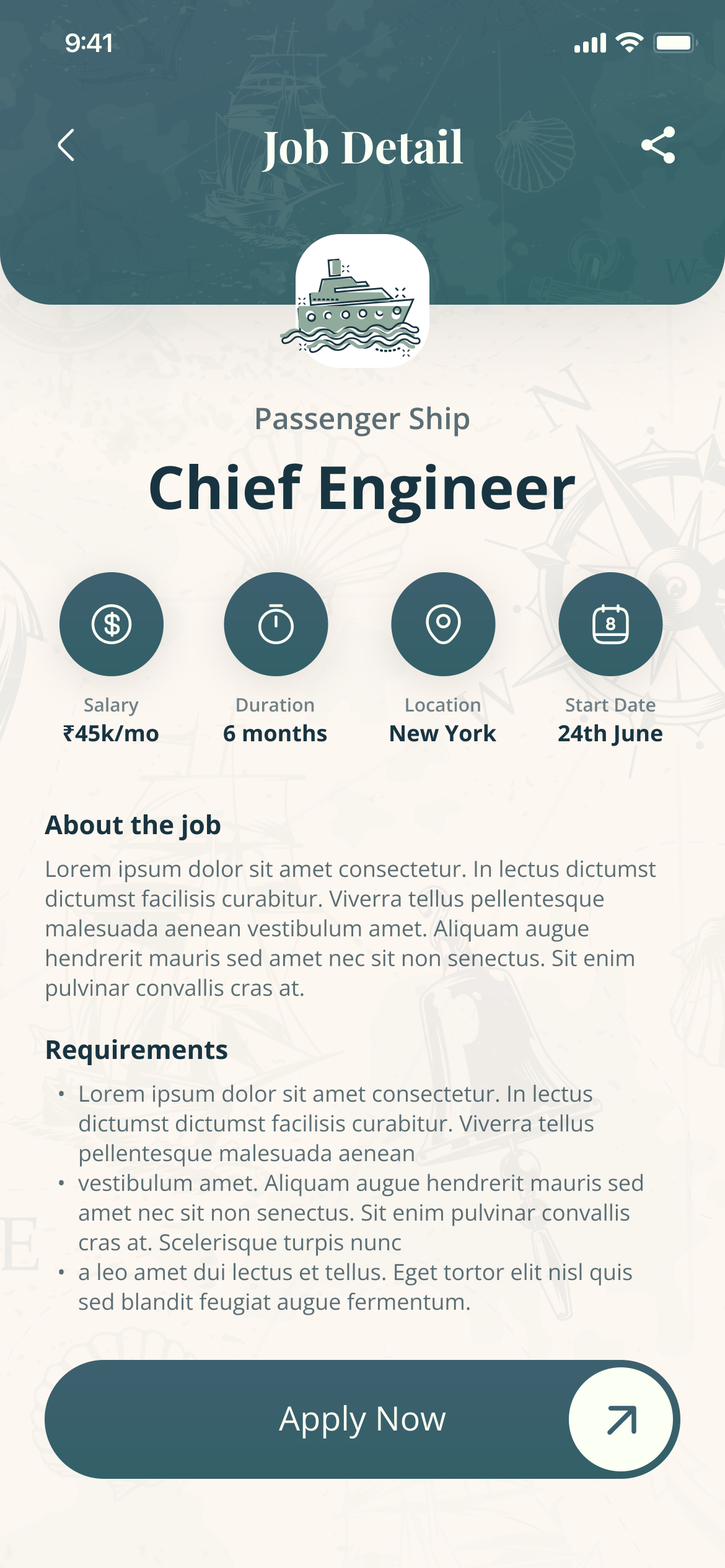
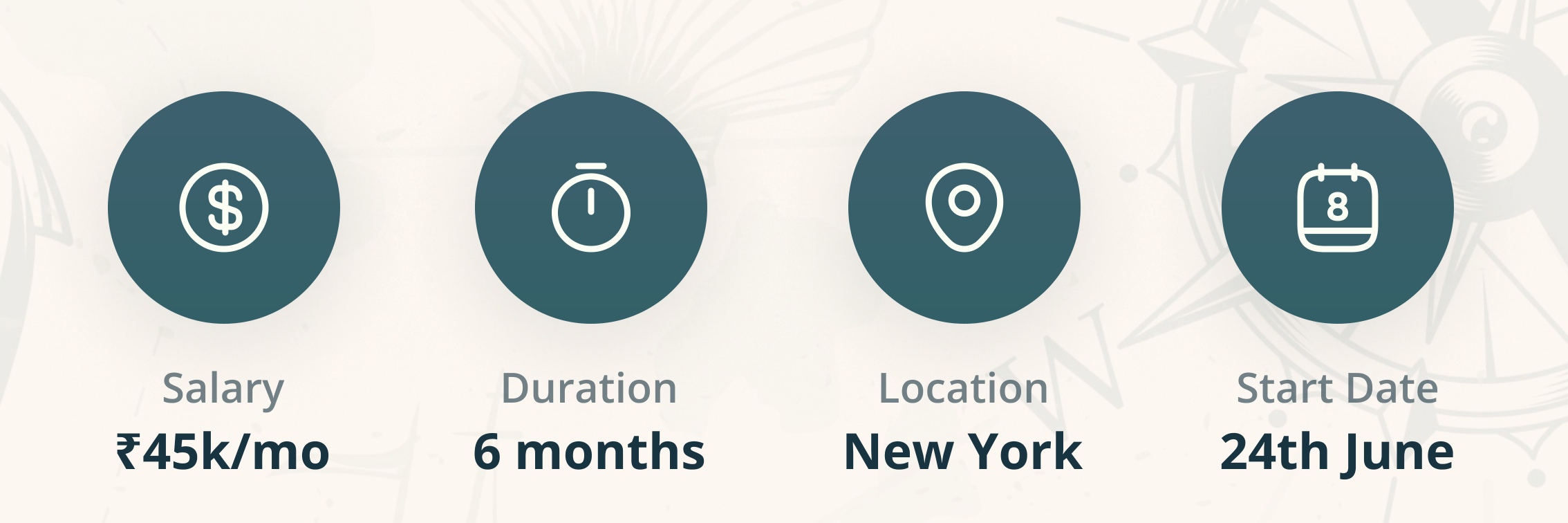
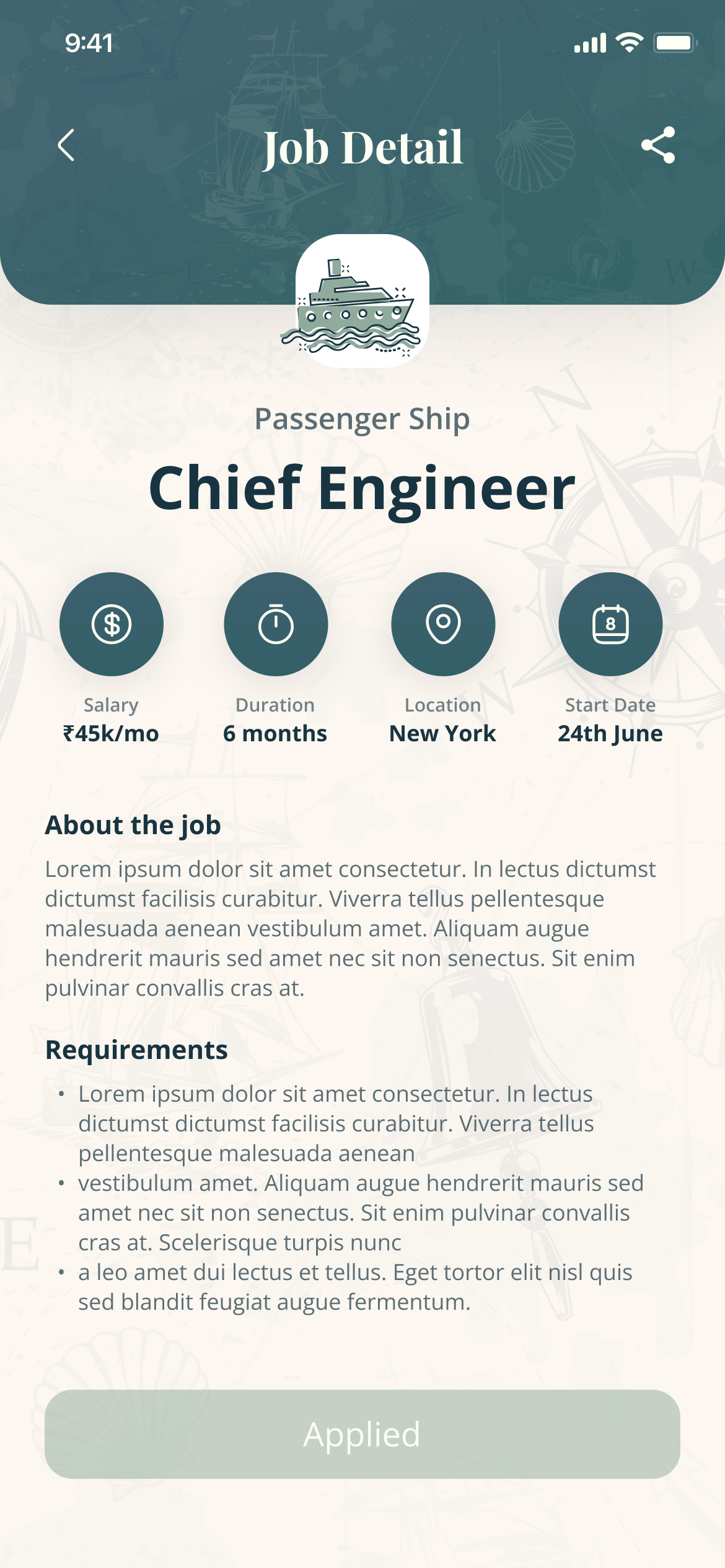
A — Job facts
Salary, duration, location and start date sit above the description, as four icons.
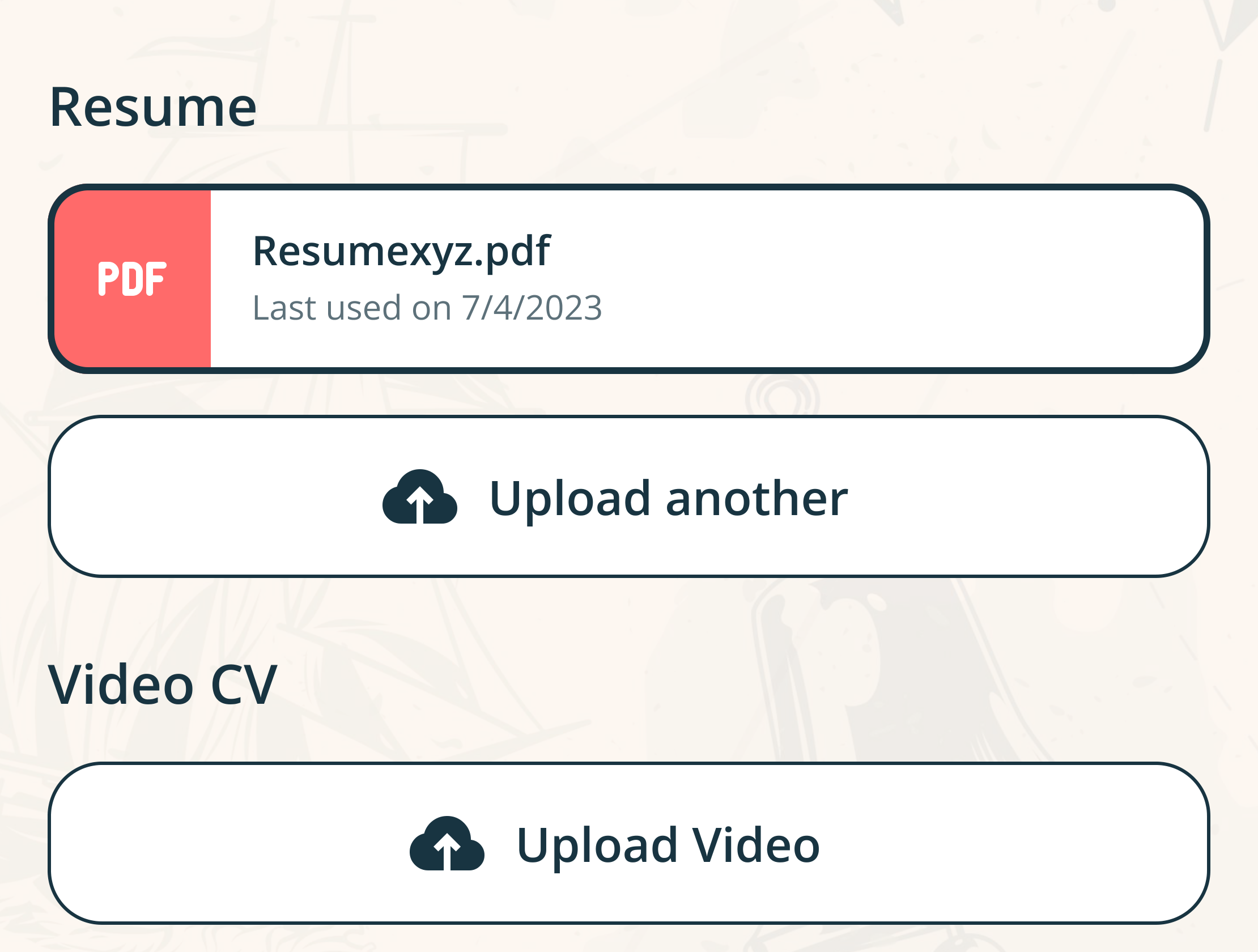
B — Apply
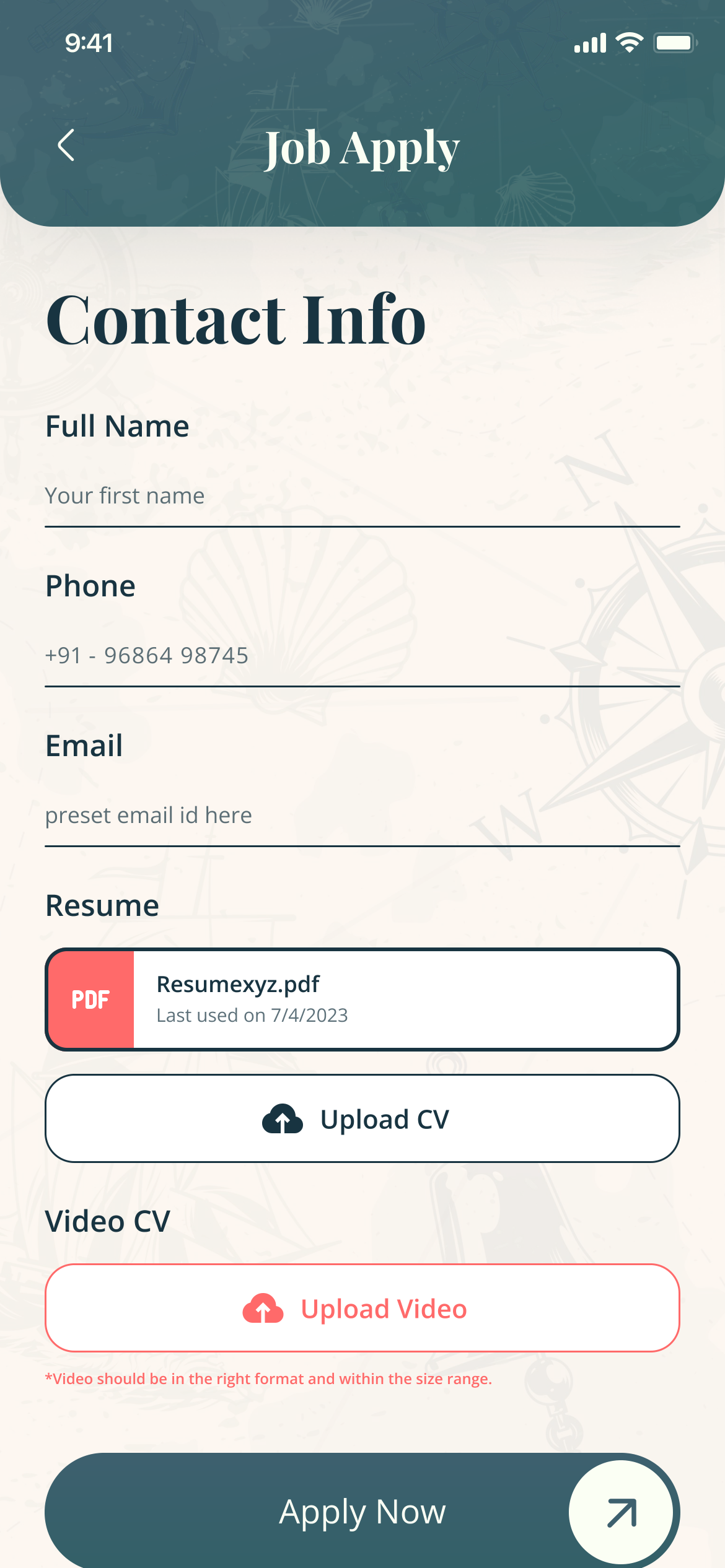
Apply offers the last CV with the date it was used; a video CV is optional, not a gate.
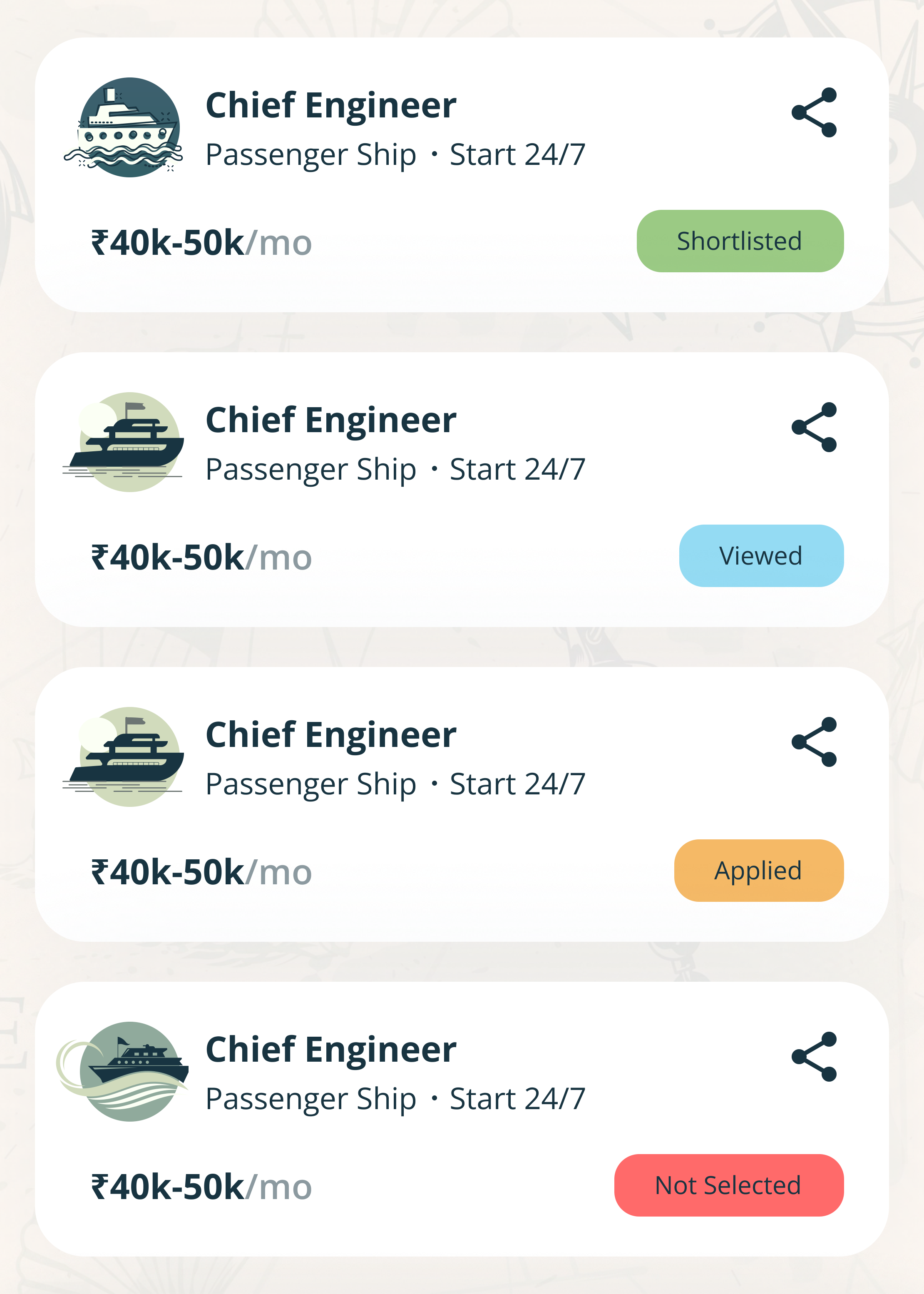
C — Status
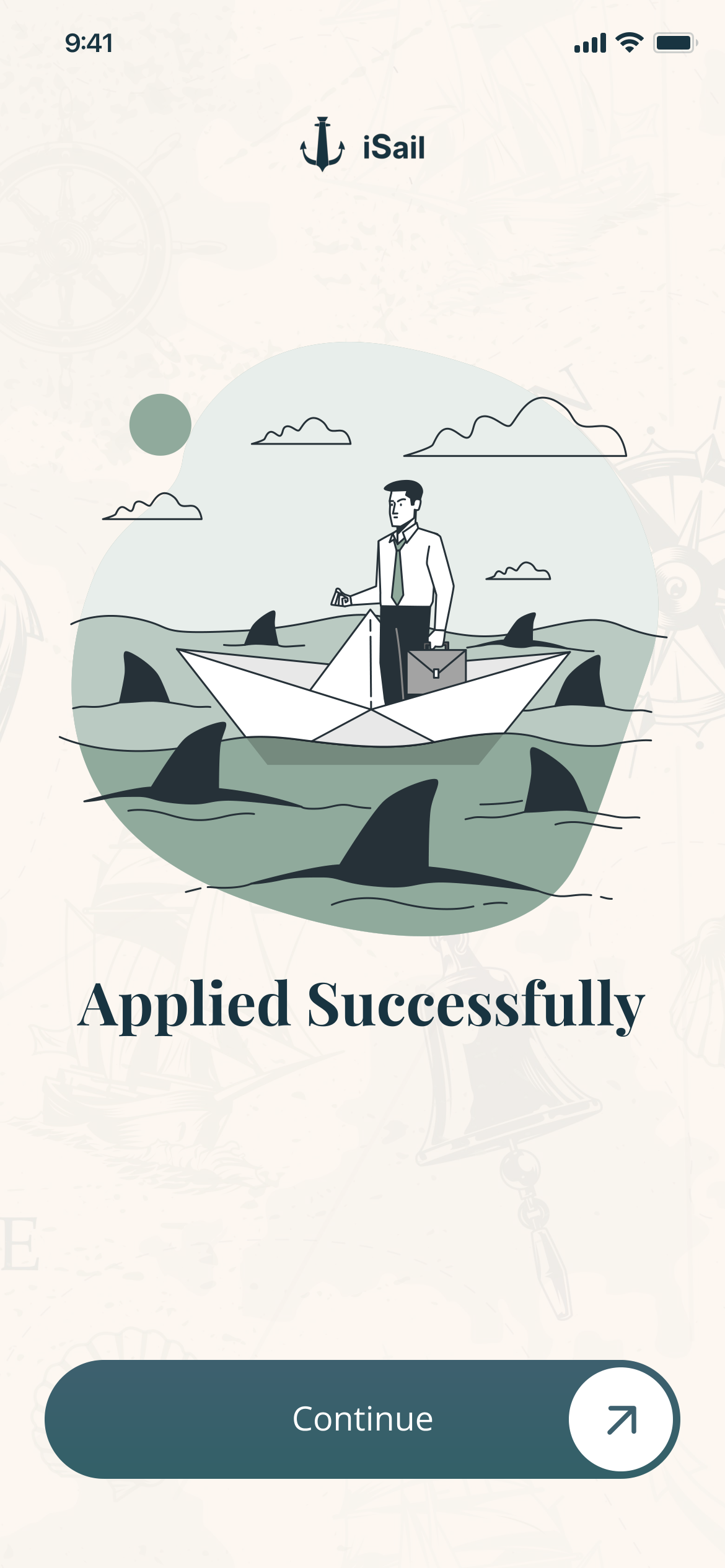
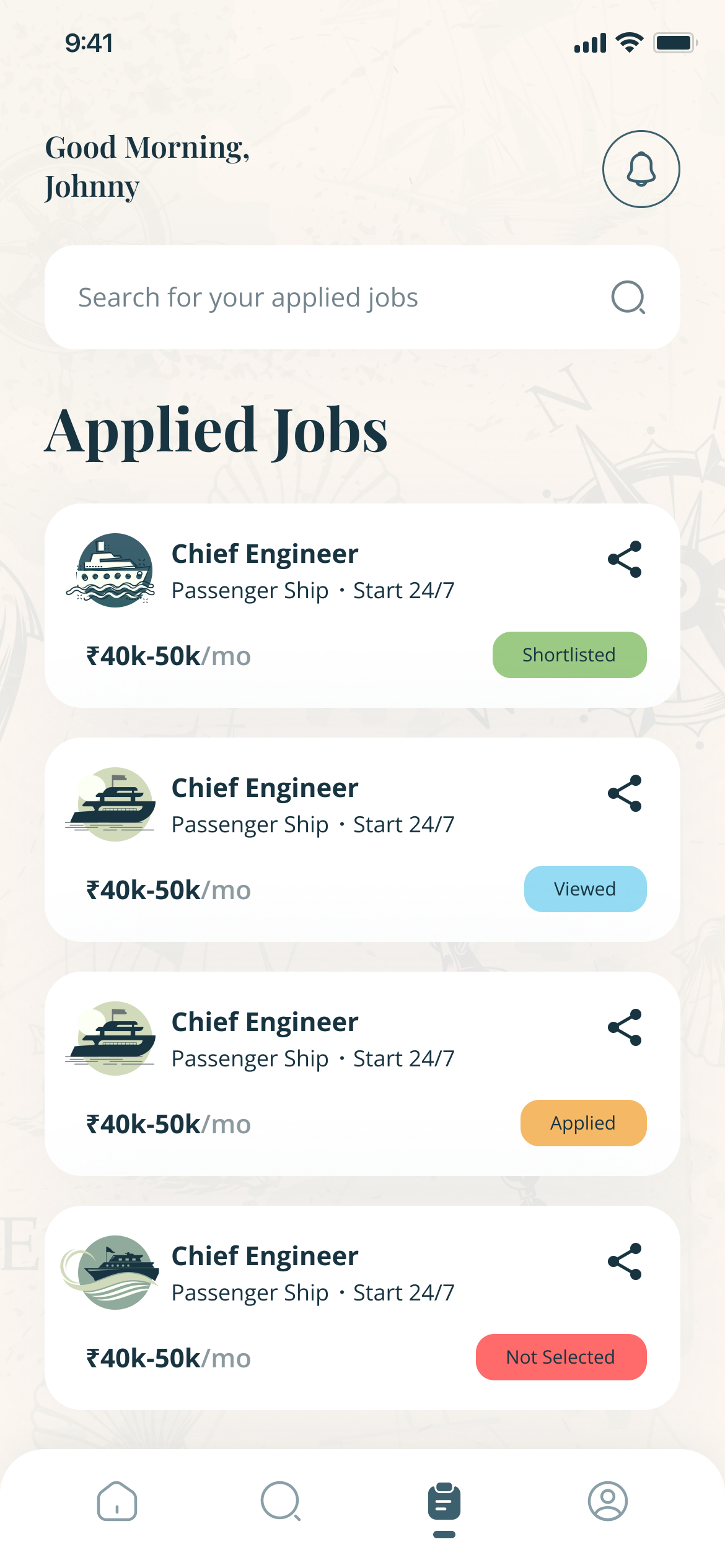
Every card says where it stands, in words and colour: Applied, Viewed, Shortlisted, Not Selected.
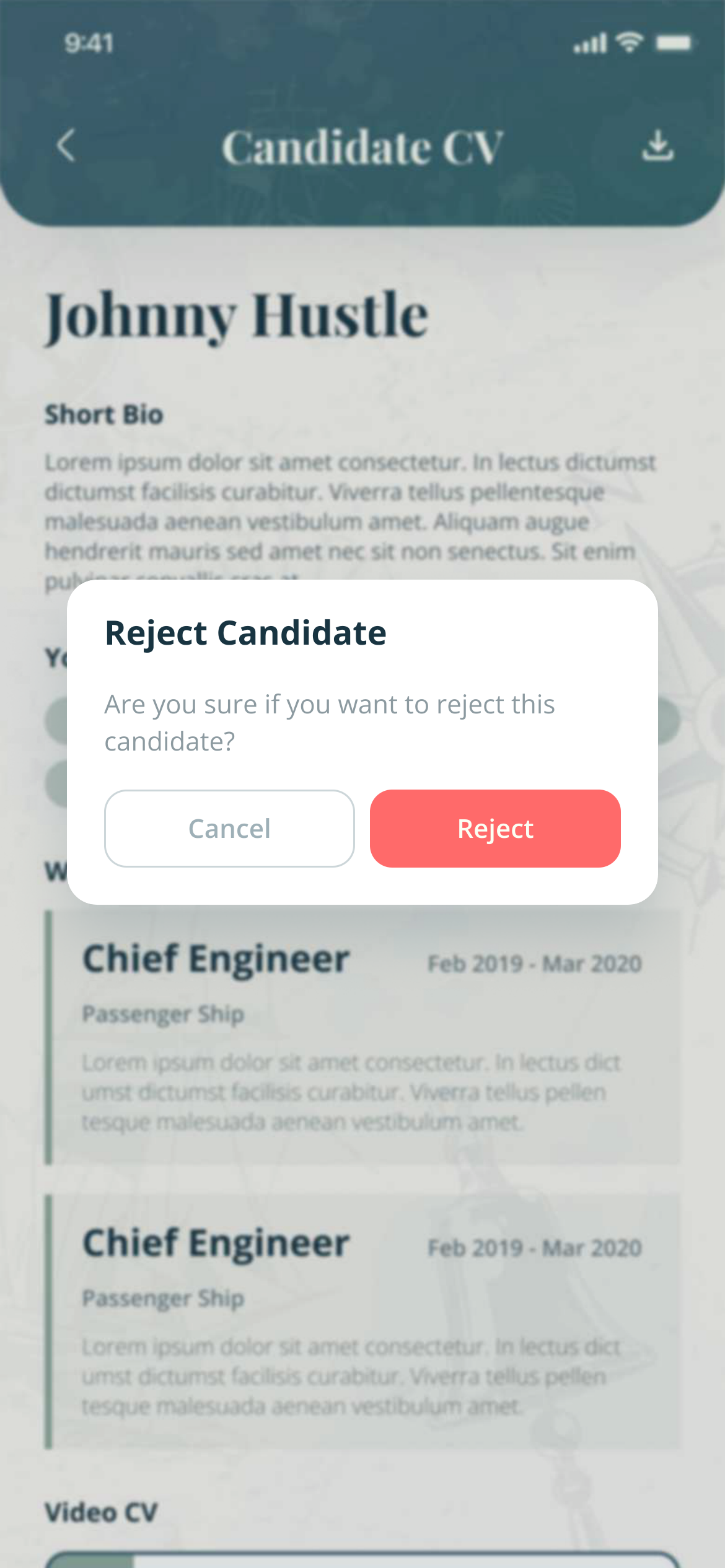
D — The recruiter
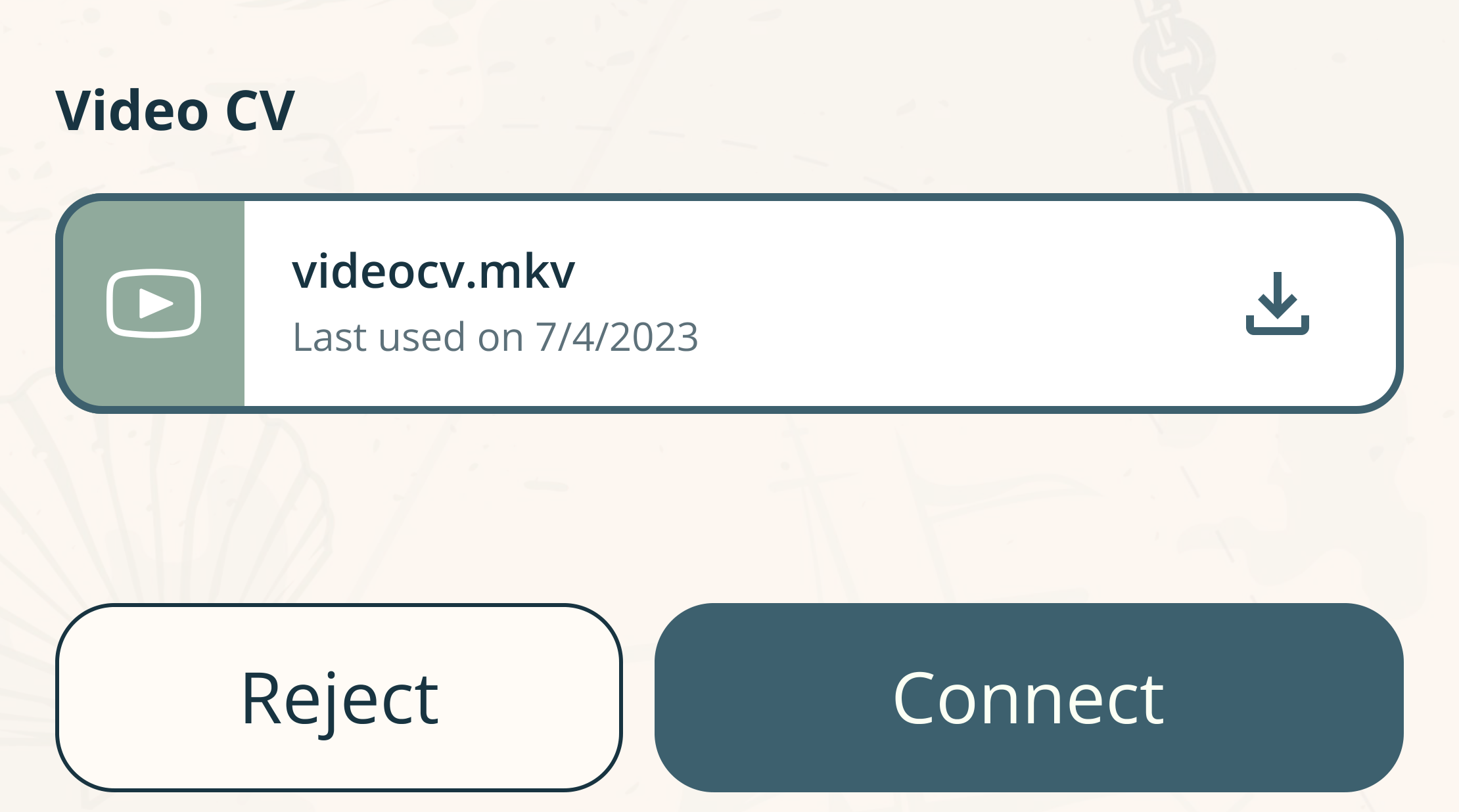
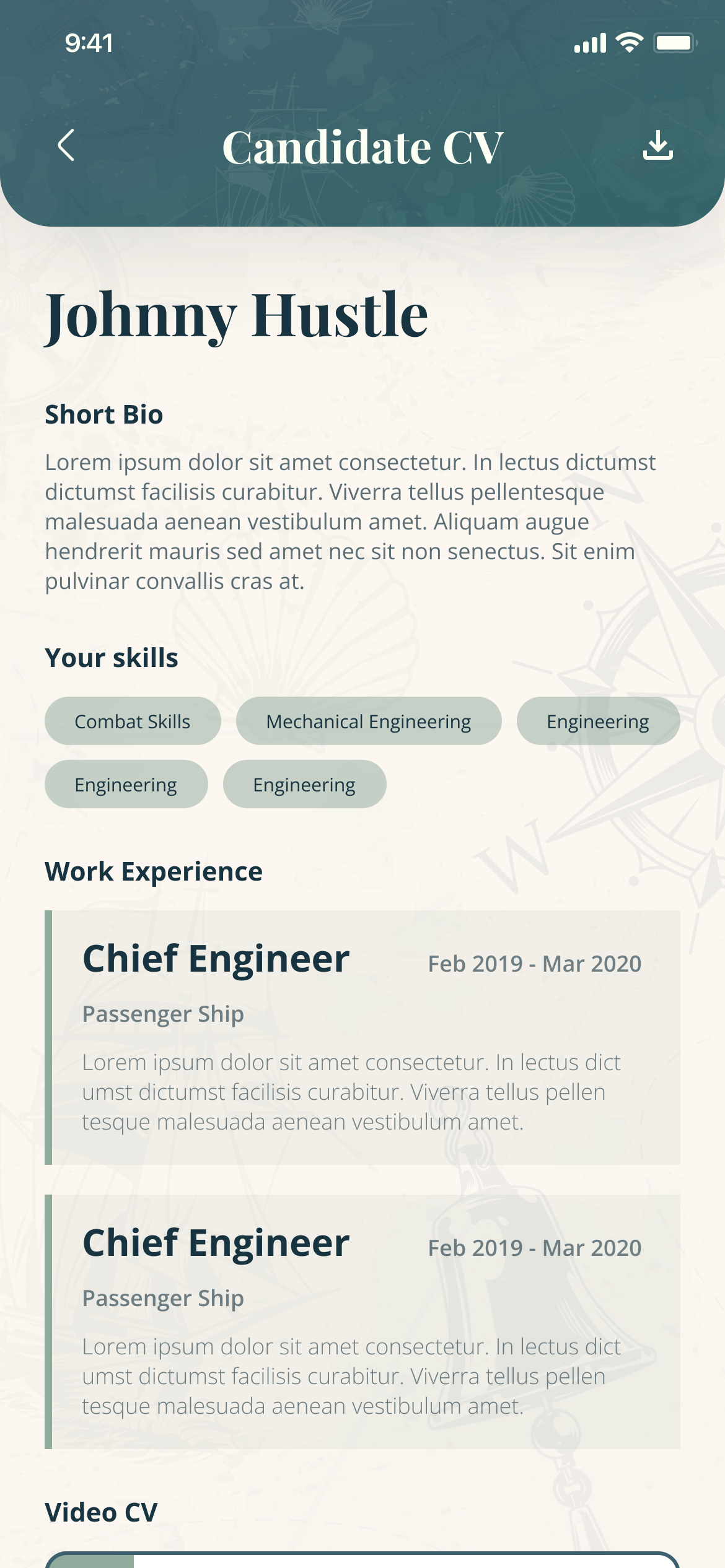
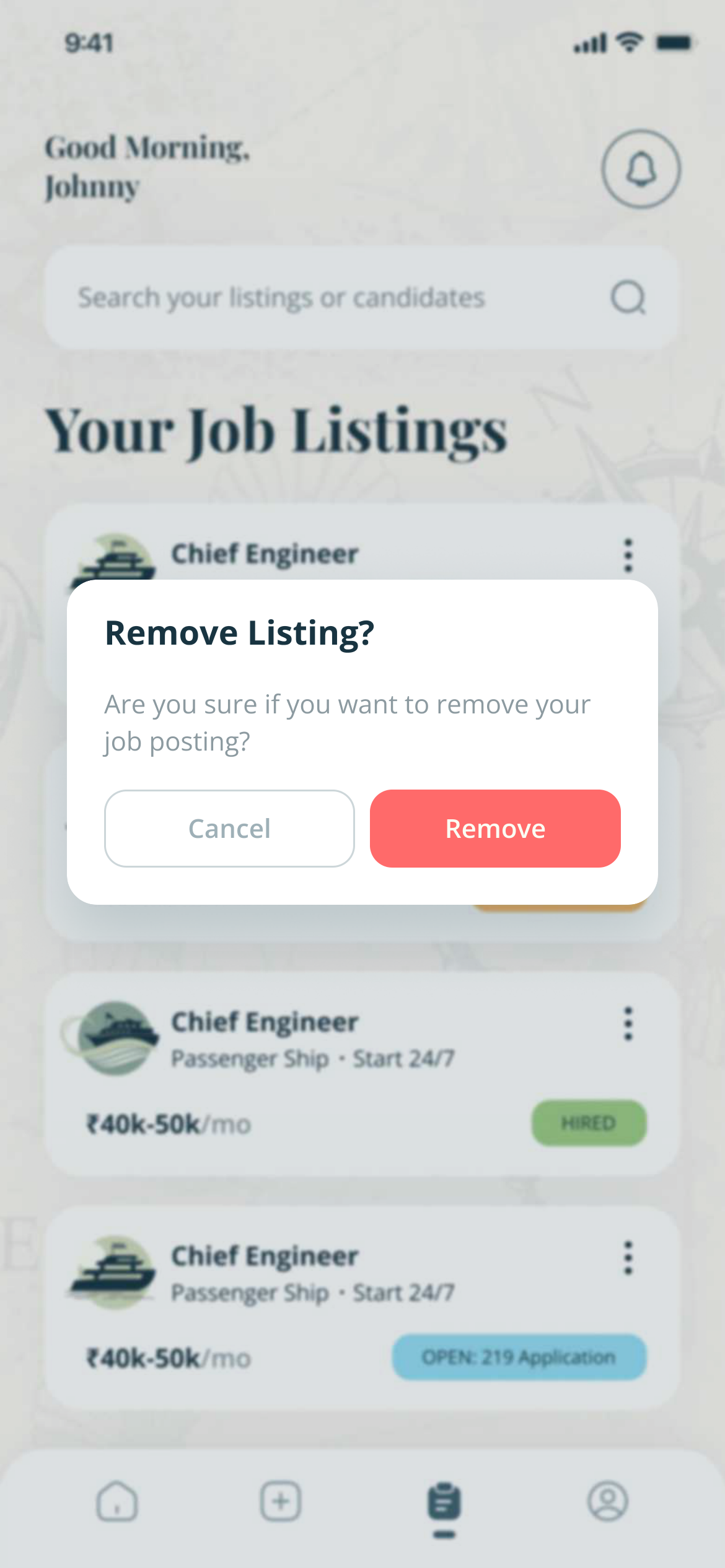
A candidate’s CV ends in Reject or Connect. Reject asks first; Connect confirms the request went out.
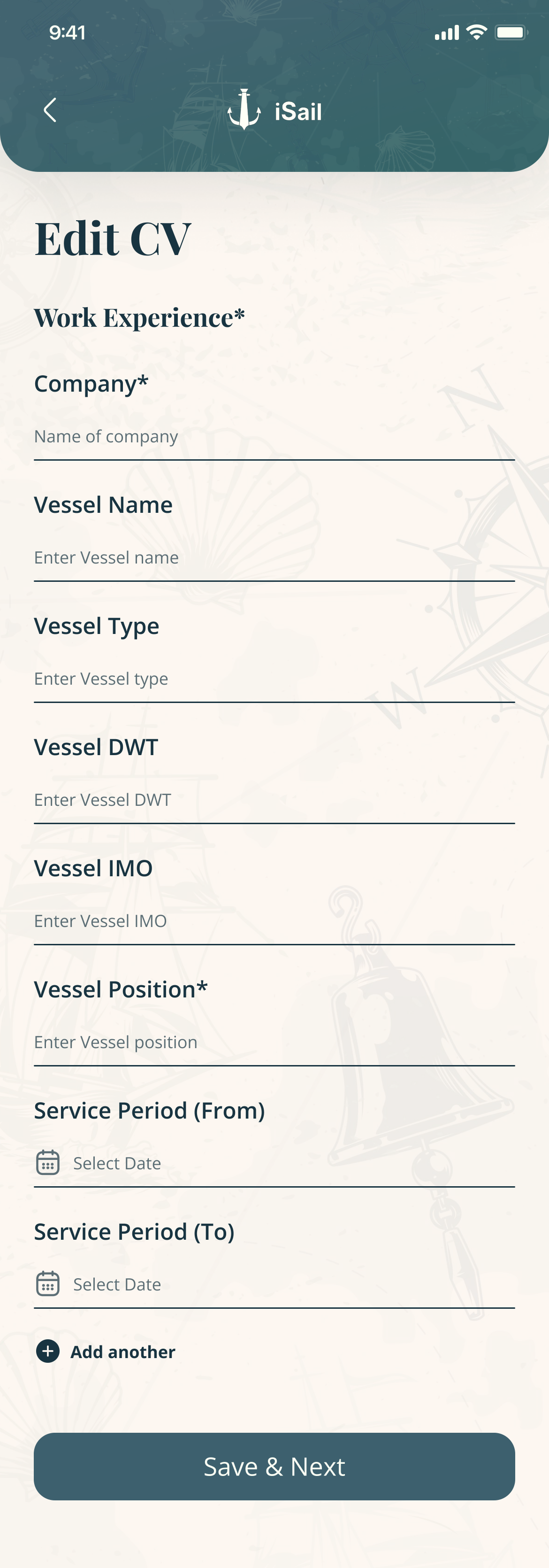
06 — Seven sections
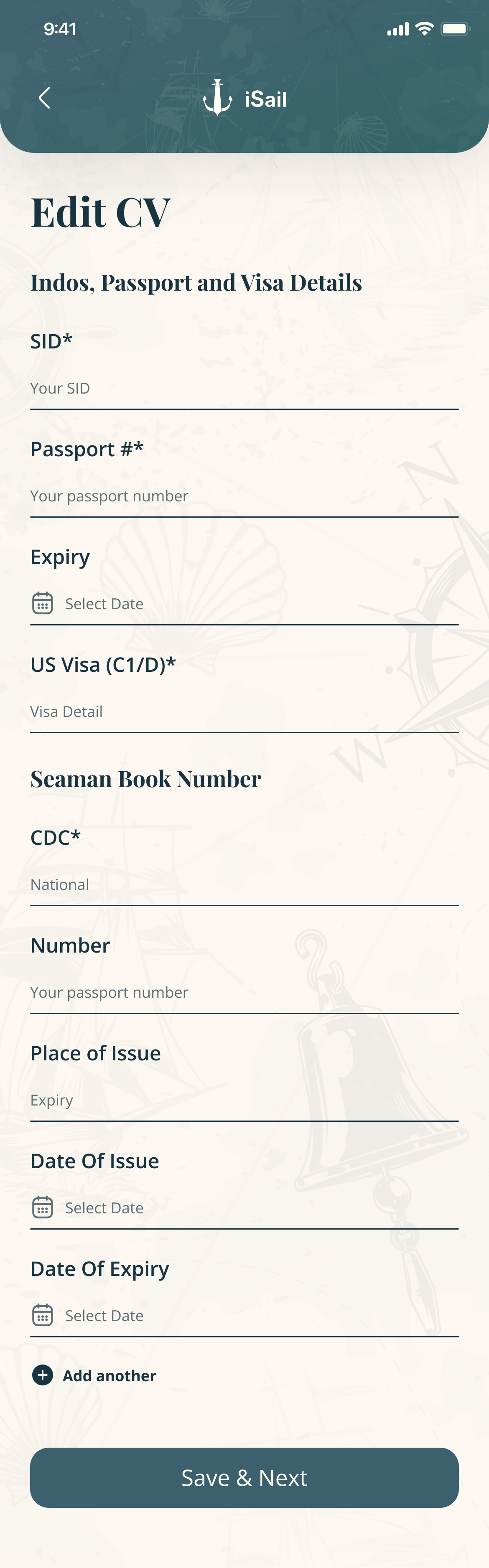
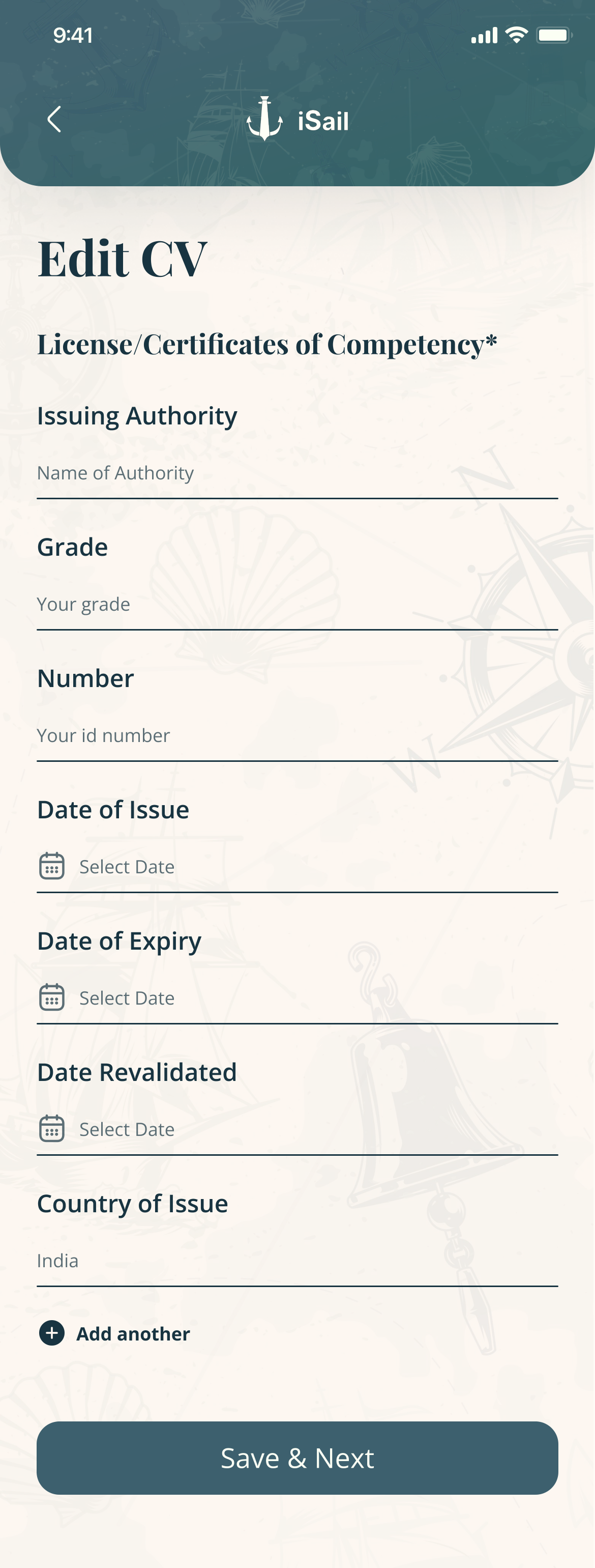
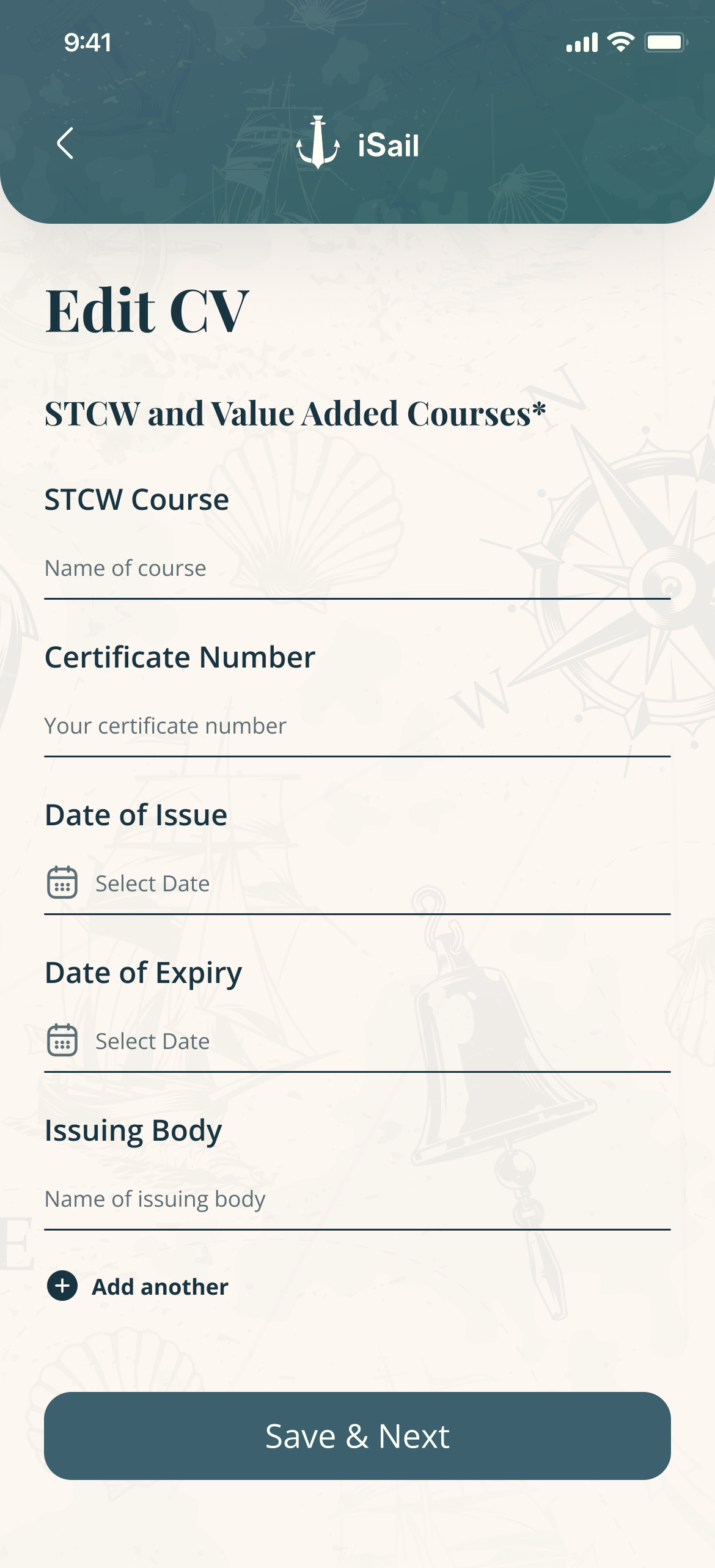
Seven sections, built around the documents a recruiter checks first.
07 — Nothing sits in a void
Every application carries a status, and the recruiter sees its own side of it.
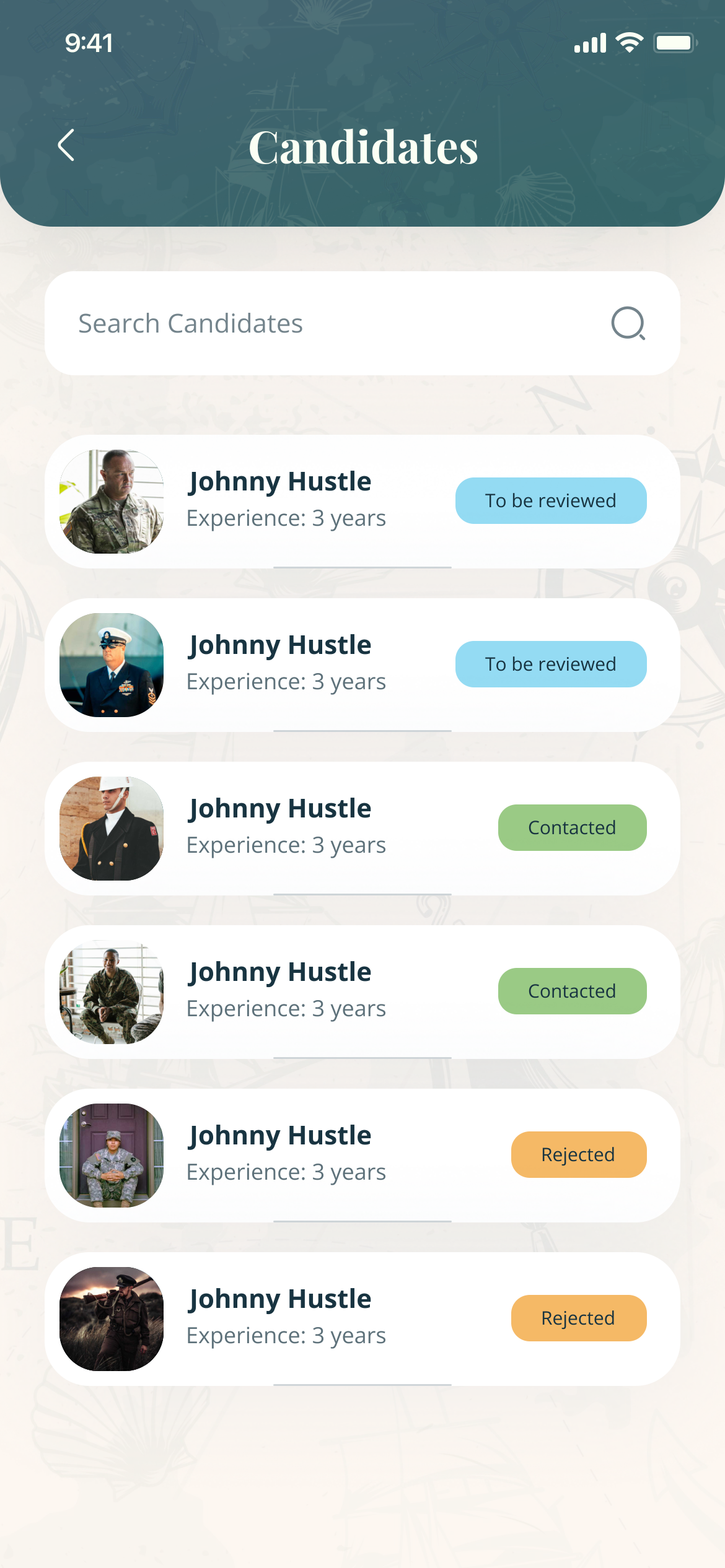
08 — A pipeline in a pocket
Post, review, decide: a hiring pipeline on a phone, not a back office.
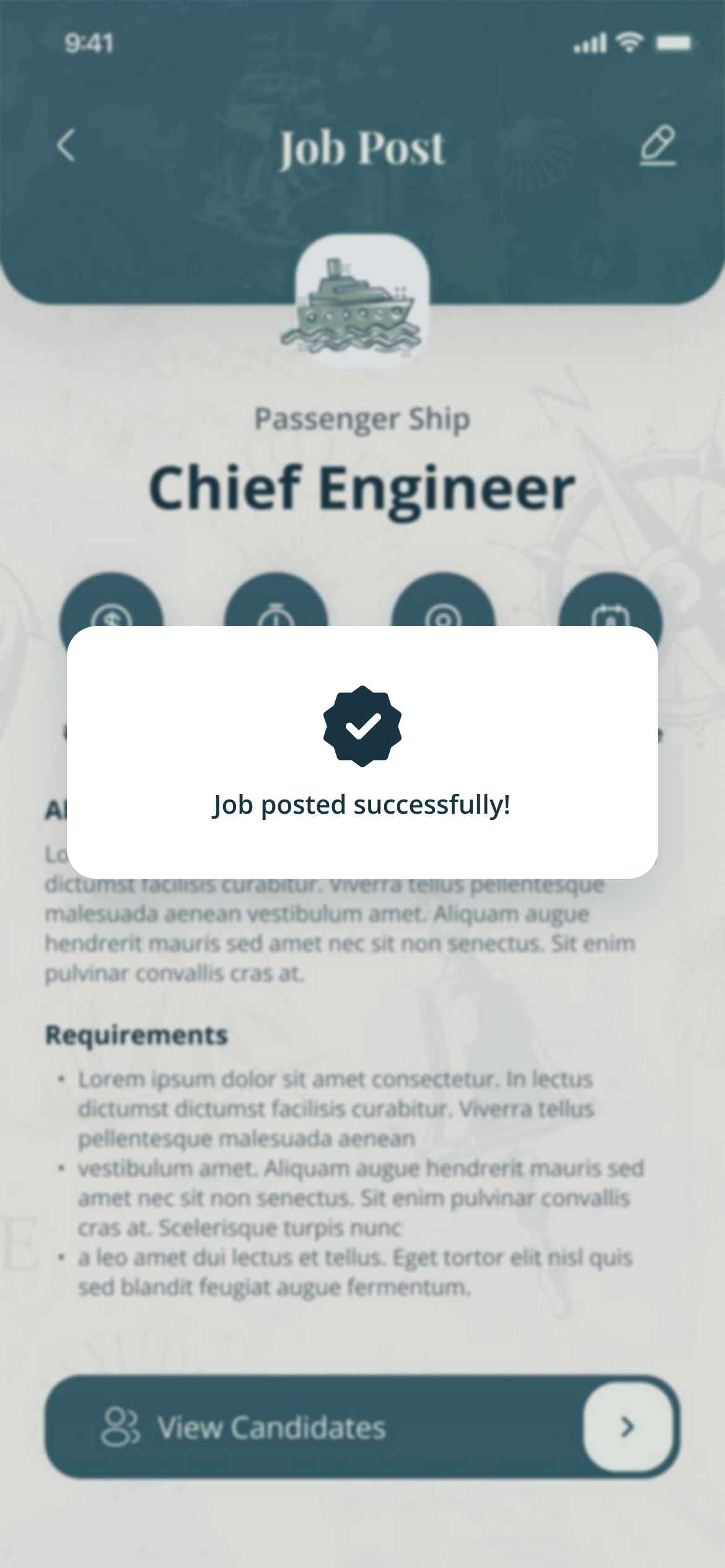
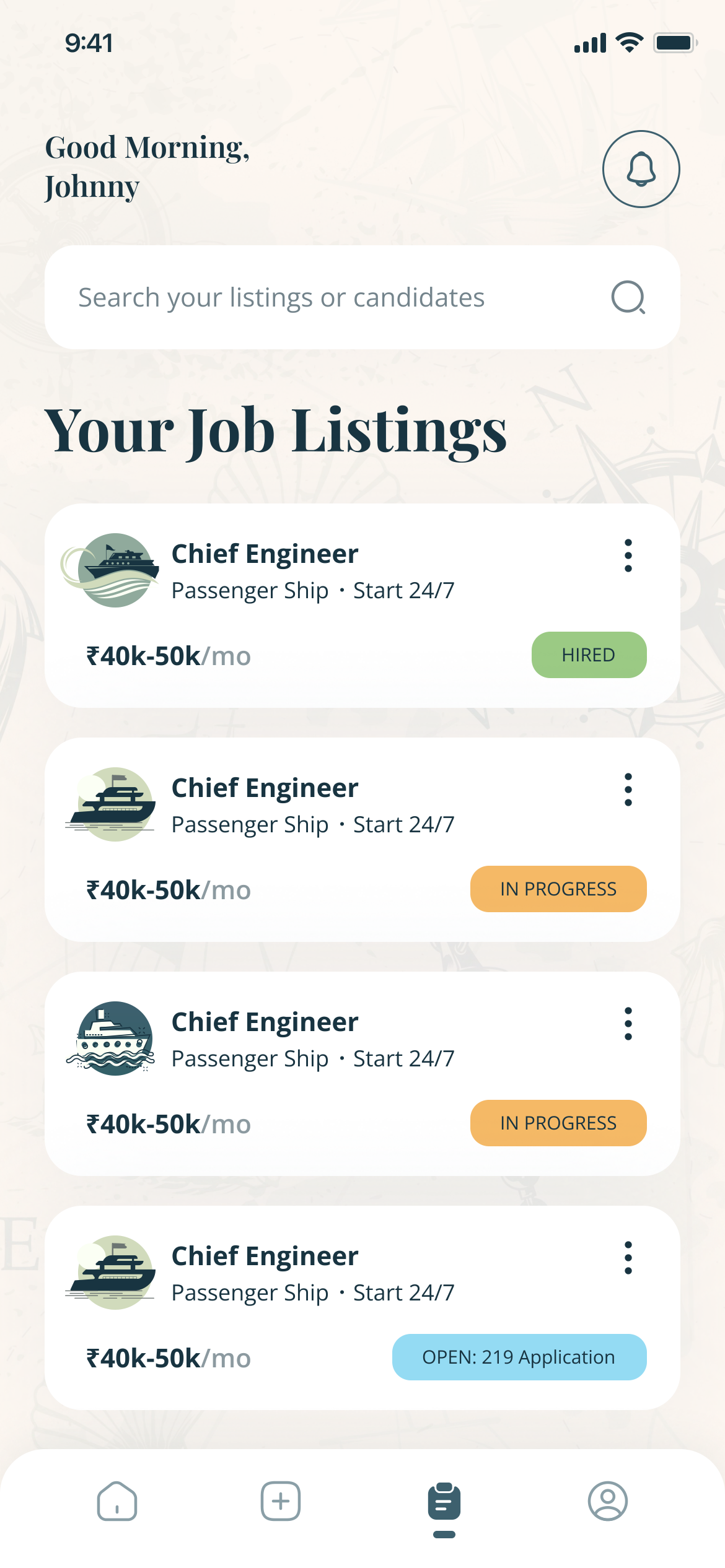
09 — Paid reach
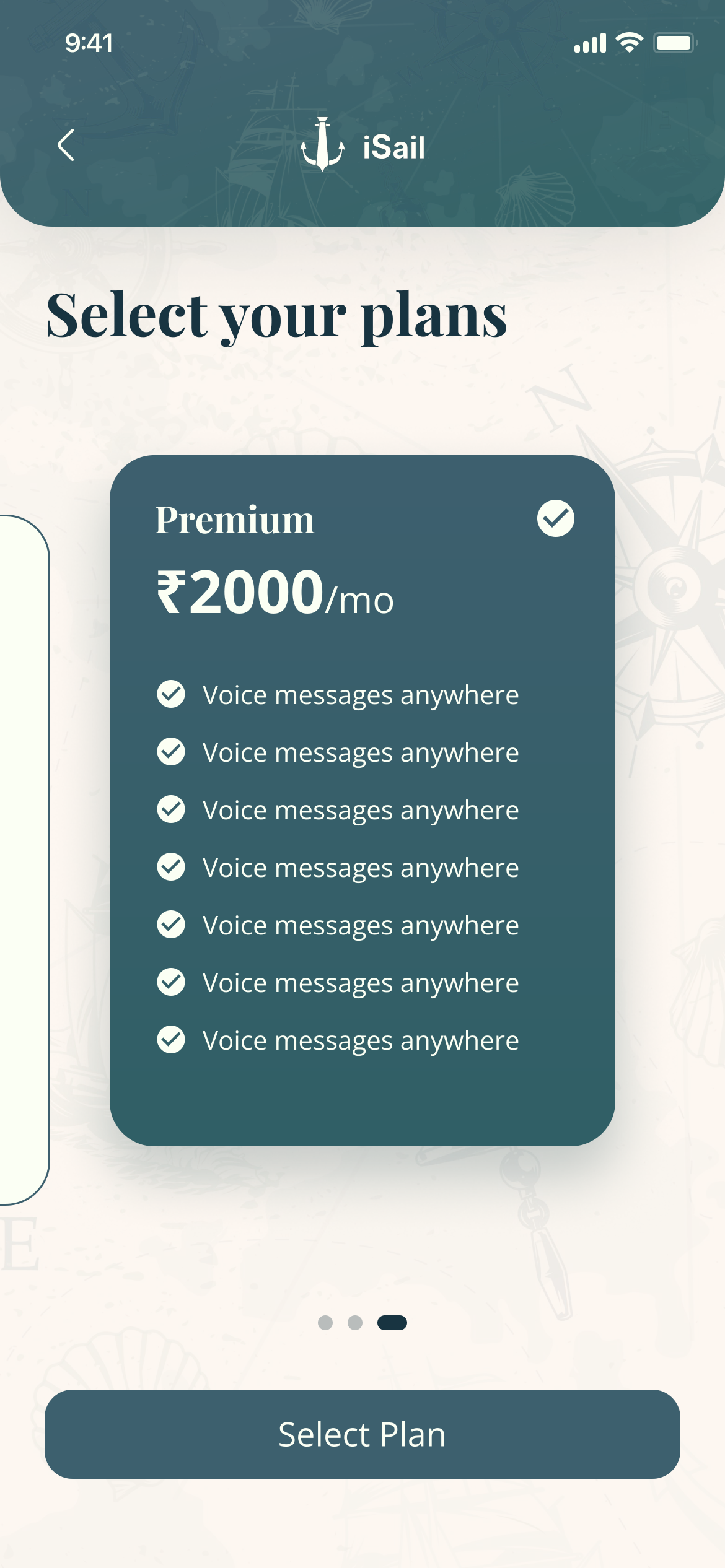
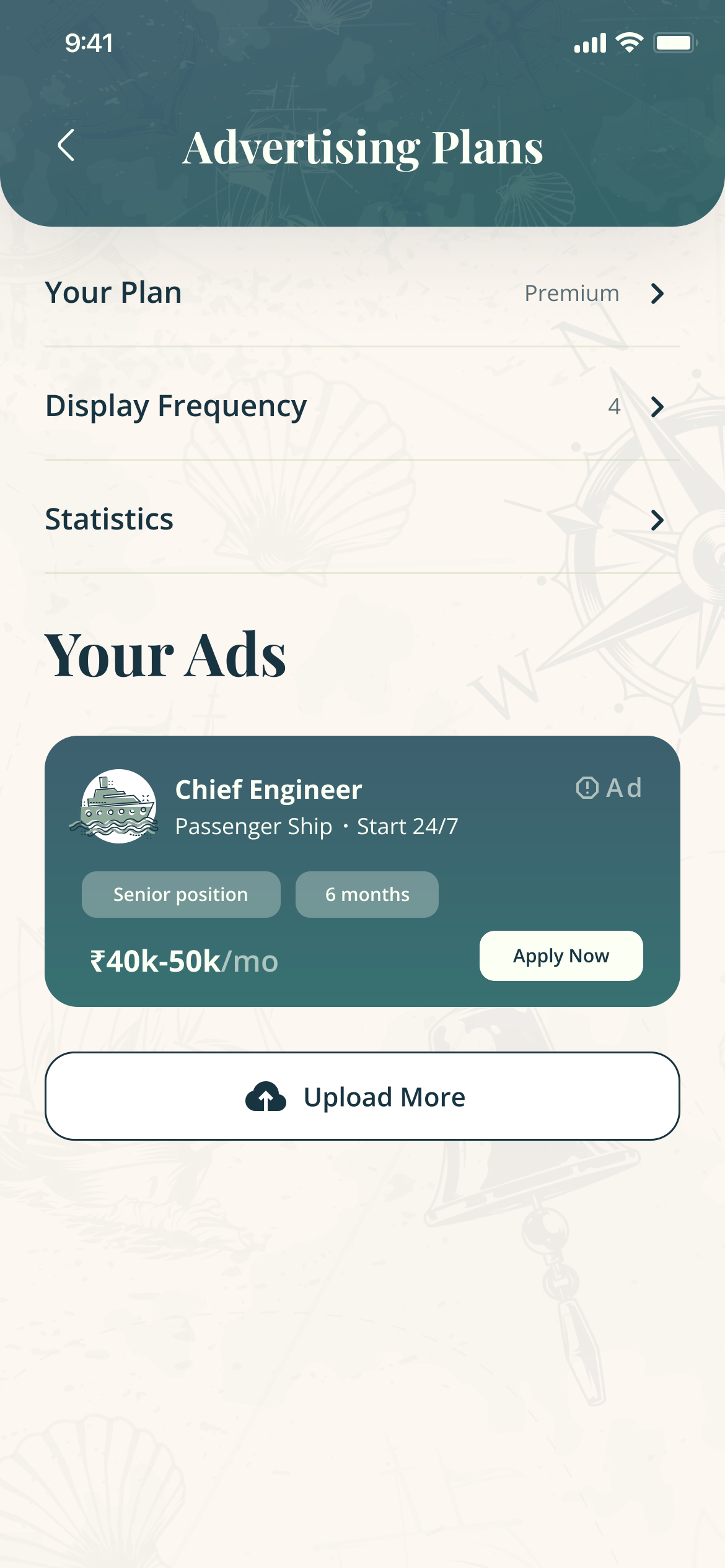
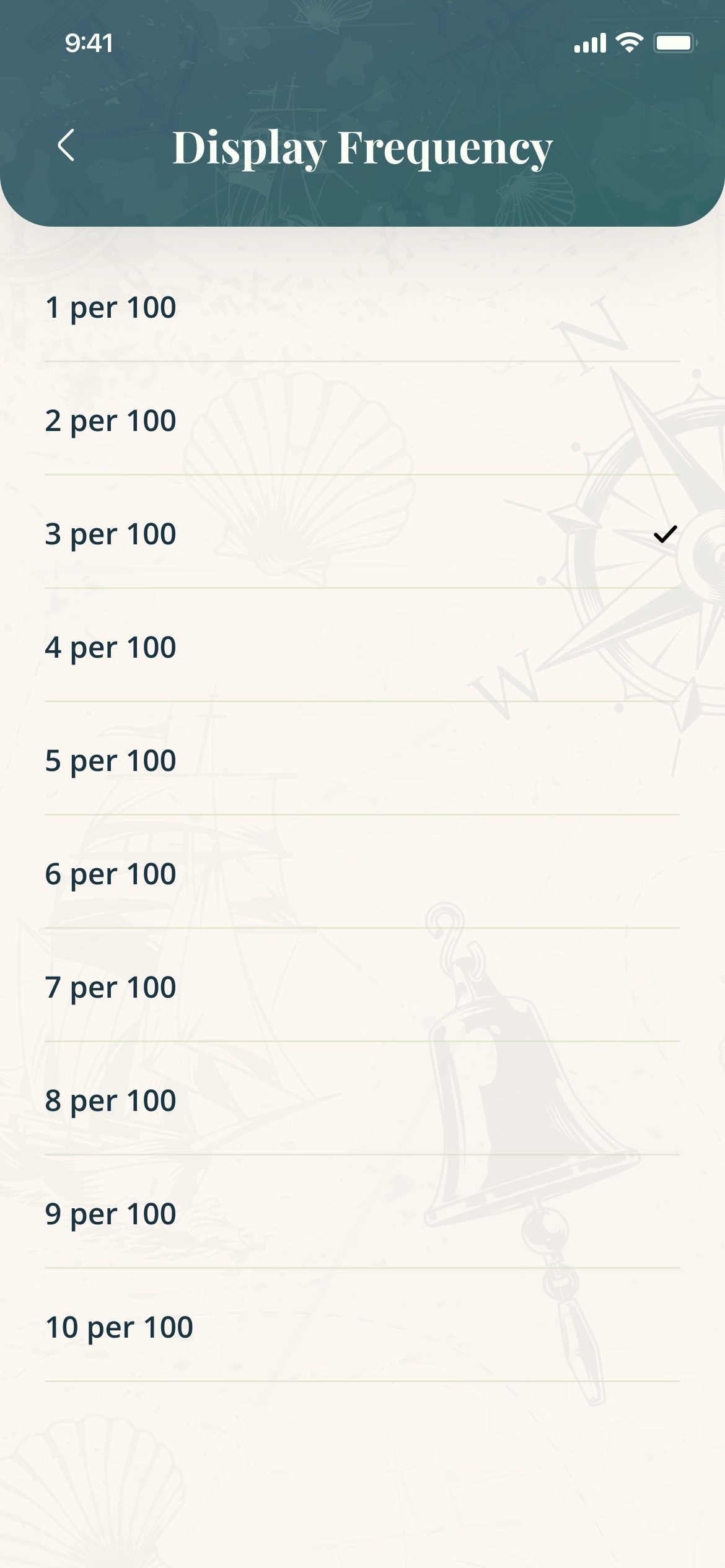
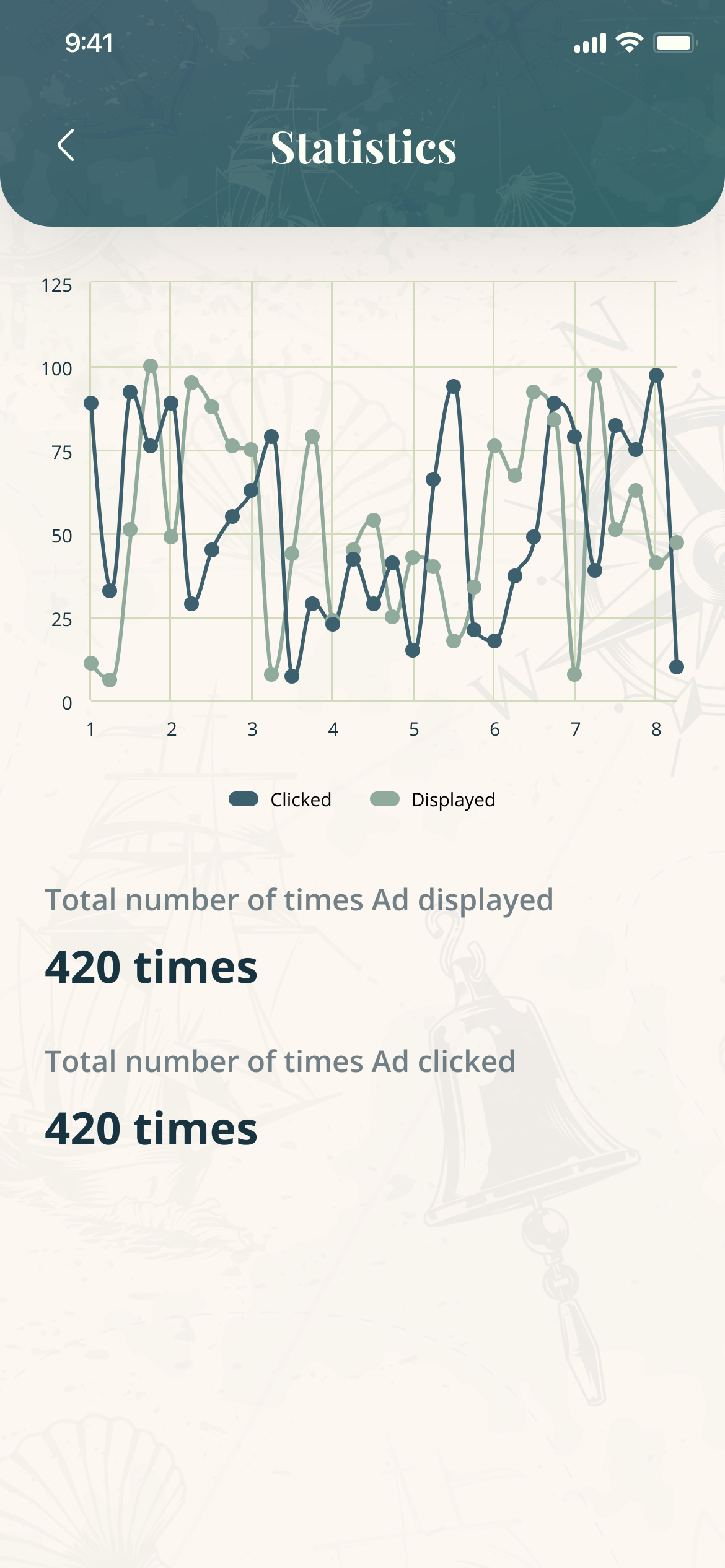
Both sides subscribe; recruiters can buy reach, and see what it bought.
10 — The screens nobody screenshots
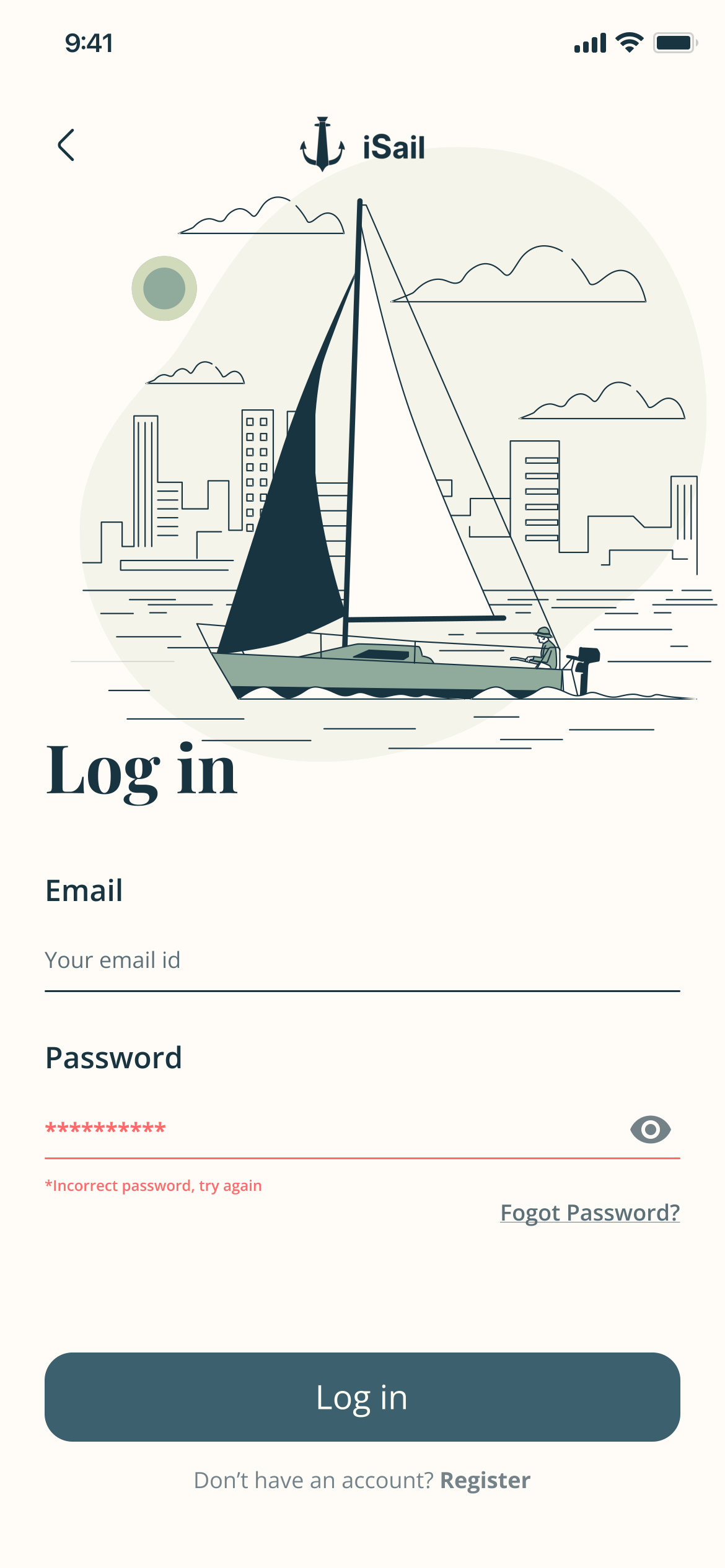
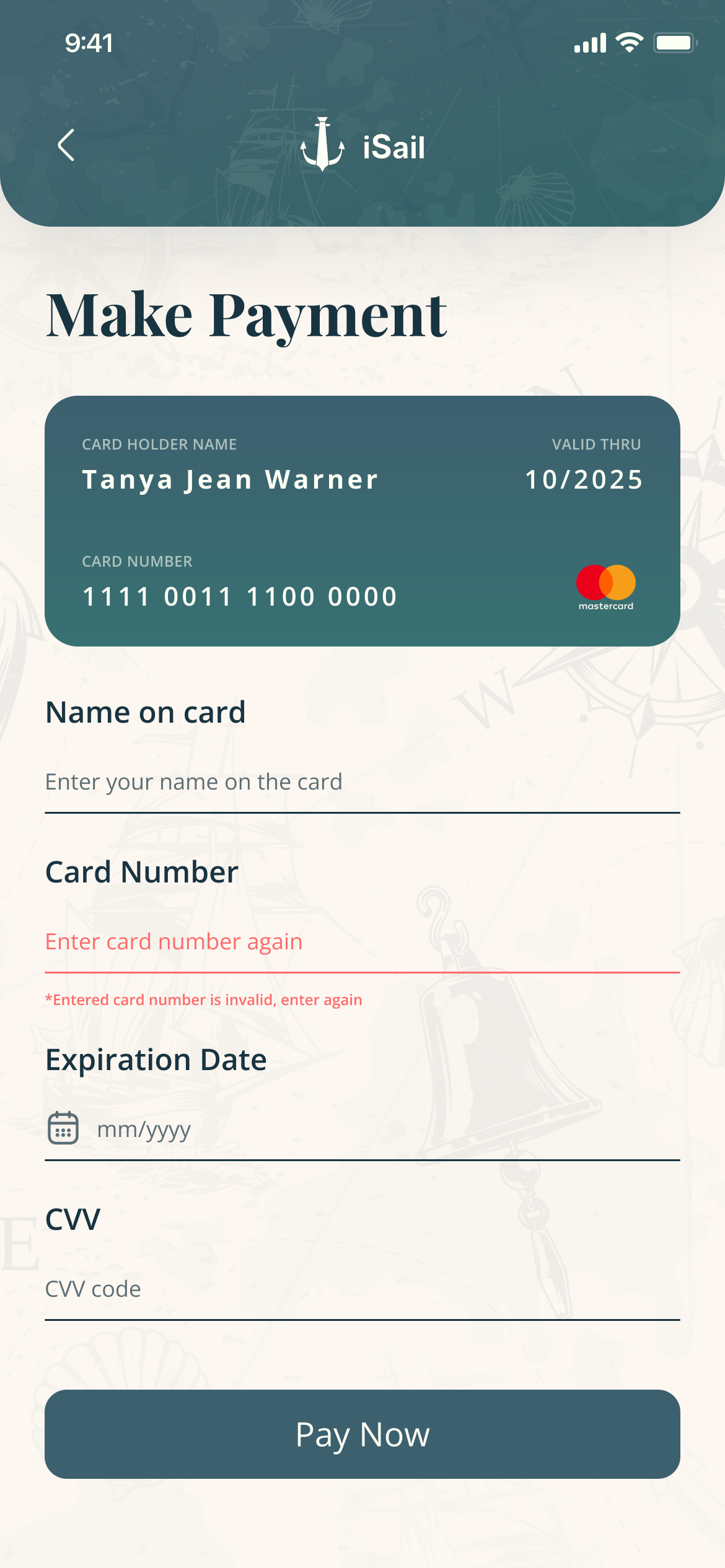
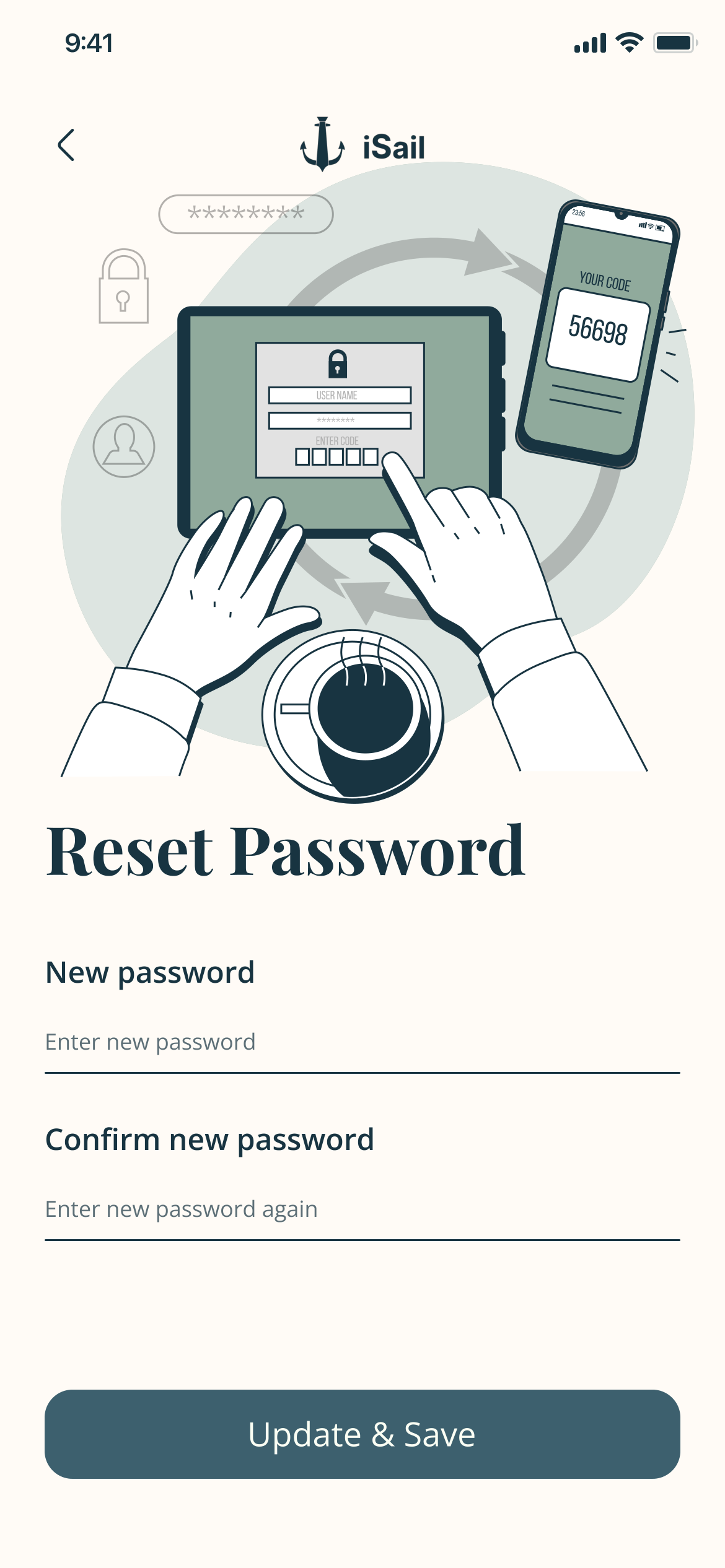
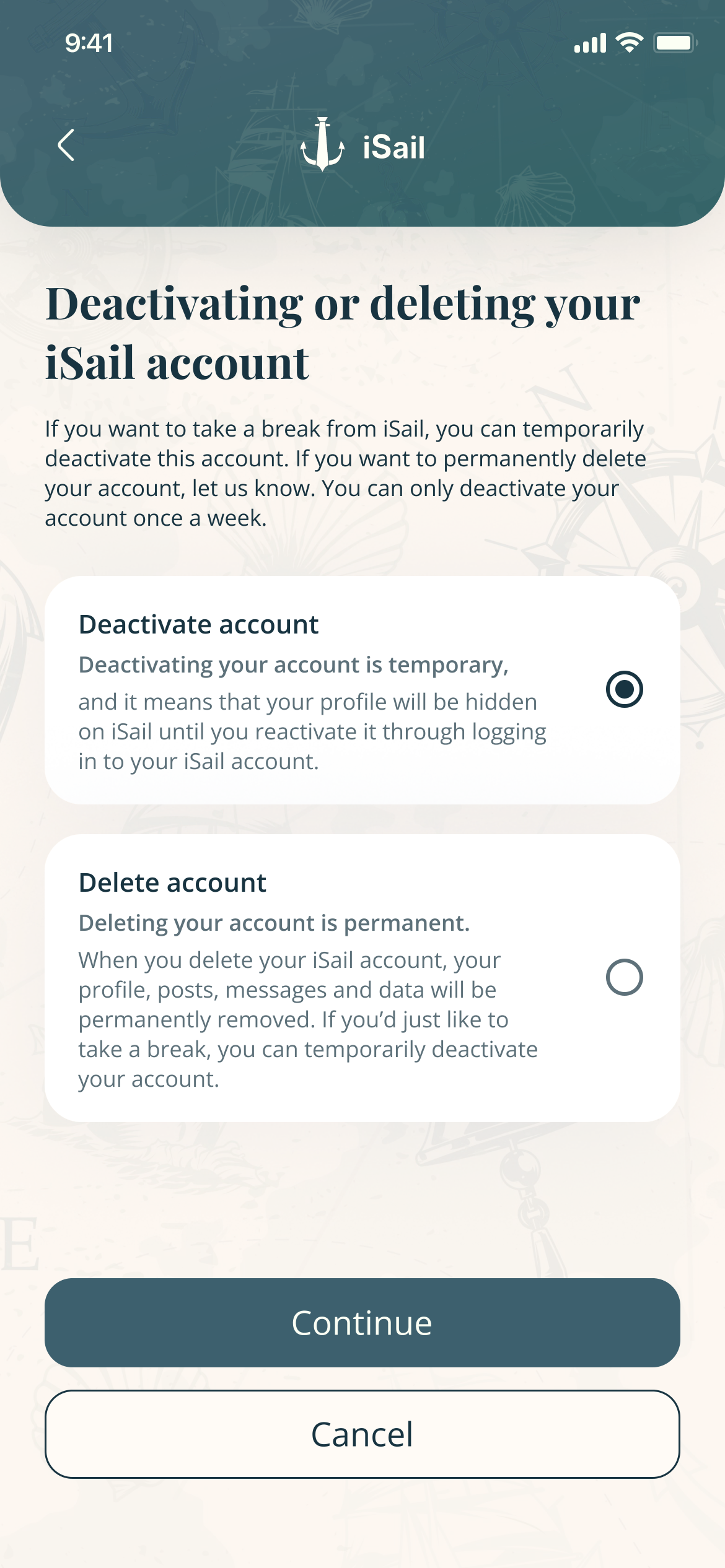
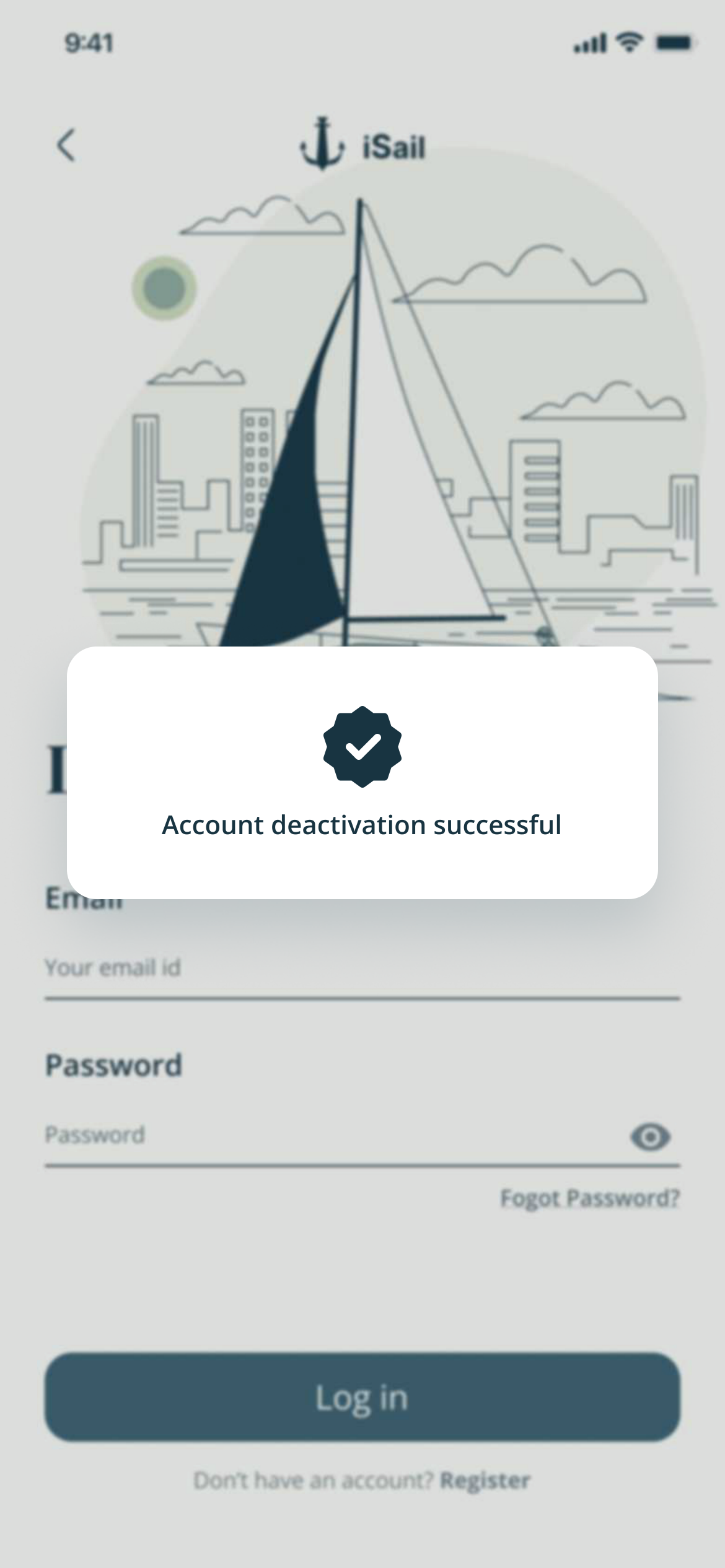
Every error names what failed, at the field; every big decision asks first.
11 — Colour and status
A chart-room palette: one deep teal for anything you can act on, and soft status colours.
Colour
Status — seafarer · recruiter
12 — Four calls
Four calls, and what each one cost.
01
GainedOne sign-in, one payment flow, one kit for 111 screens.
CostThe first screen asks a question before showing any value.
02
GainedThe most repeated action takes seconds.
CostA thin profile can still apply; screening moves to the recruiter.
03
GainedA gentler word for the person receiving it.
CostTwo vocabularies for one decision, to keep in sync.
04
GainedA seafarer away for months can come back to their profile.
CostOne more screen before a permanent delete.
13 — The second pass
What the second pass would fix.
One state modelDefine the application states once and map both sides’ words onto them: the recruiter’s Rejected is amber while the seafarer’s Not Selected is red.
Inherited fieldsQuestion every field from the old crew forms. Eye and hair colour don’t belong in a hiring profile.
A copy pass“Oppurtunity”, “emploee”, “Fogot Password?” and “Internation Airport” all reached the final screens.
Real plan copyEvery plan lists “Voice messages anywhere” as placeholder. Plans sell on their differences, so write them first.
Next — 04